

We’ve all had that morning when the electric gate just refuses to budge, leaving everyone stuck at the curb. Keeping gates in good shape in Los Angeles’ shifting weather—sunny days one moment, unexpected storms the next—can be a challenge. But with a clear seasonal maintenance checklist, managing your gate’s health is simpler than it sounds.
Regular upkeep like cleaning, lubricating moving parts, and checking electrical connections keeps gates running smoothly and helps prevent costly repairs down the line. This guide will walk through practical steps anyone can follow to extend the life of their gate through every season.
By staying consistent with these easy tasks, homeowners and property managers in LA can avoid breakdowns, improve security, and enjoy hassle-free operation year-round. It’s like giving your gate a little tune-up so it’s ready whenever you need it.
Why Seasonal Gate Maintenance Matters In Los Angeles
Electric gates in Los Angeles face a unique mix of challenges throughout the year. Keeping them in good shape isn’t just about looks; it’s about keeping the gate safe, reliable, and running smoothly despite the weather and frequent use.
How Local Weather Affects Electric Gates
Los Angeles weather can be tricky on gates. Sunshine, especially the strong Southern California sun, can dry out wood gates and fade paint or finishes, leading to cracks or warping. A homeowner might notice their gate looking a bit tired with peeling paint or stiff hinges after a hot summer.
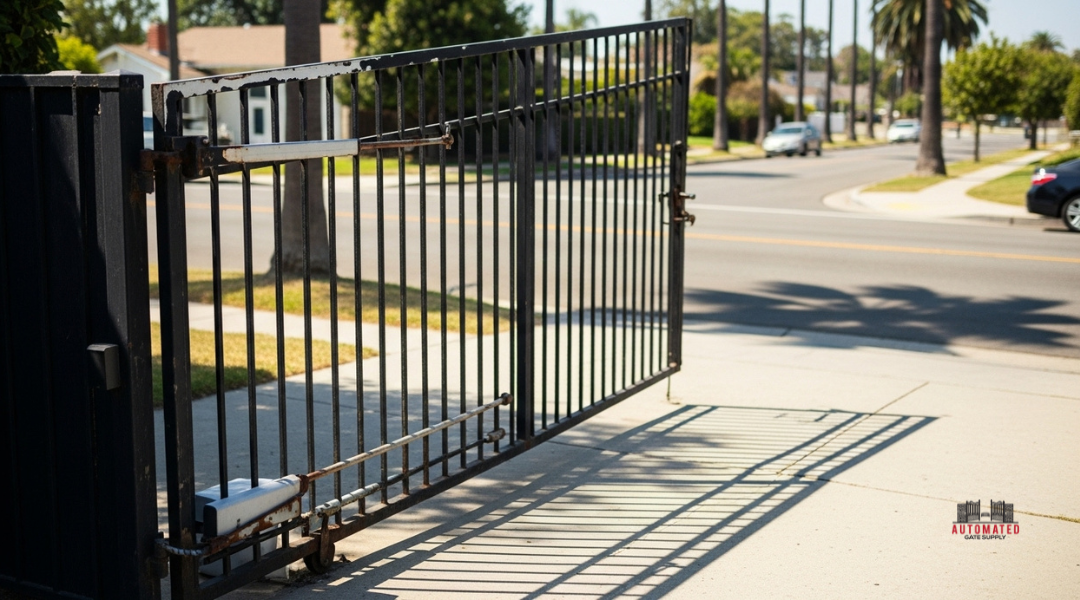
Then there’s the rare rain or coastal humidity, which can cause metal parts to rust and weaken electrical components. Dust and wind also add grime to motors and sensors, slowing down gate operation or causing sensors to misfire.
Pro tip: After a few weeks of dry, hot weather, wiping down the gate and lightly lubricating the hinges and metal tracks can prevent heat damage and rust later on. It’s like giving your gate a little summer spa treatment.
Benefits Of Regular Seasonal Checks
A gate that works well means fewer surprises—no getting stuck outside or paying for last-minute repairs. Regular seasonal checks catch small problems like loose bolts, worn-out motors, or sensor misalignment before they get bigger.
Simple maintenance tasks include cleaning dirt from sensors, tightening hardware, testing the motor, and checking the electrical connections. This not only extends the gate’s lifespan but also saves money over time.
Handy checklist:
- Inspect hinges and lubricate moving parts
- Clear debris from tracks and sensors
- Test gate open/close operation
- Check for any unusual noises
Regular care also keeps the gate secure. Gates that stick or don’t close fully invite trouble. Staying on top of maintenance lets a homeowner enjoy peace of mind.
A little effort every season means a hassle-free gate all year long—like clockwork, no matter what Los Angeles throws at it.
Step 1 – Give Your Gate A Visual Check-Up
Taking a little time to look over your gate closely can save a lot of hassle down the road. Checking for small issues like rust, cracks, or loose bolts means fewer surprises and smoother gate swings. Spotting any wobbling parts early on prevents bigger repairs later.
Inspect For Rust, Cracks, And Loose Bolts
Imagine spotting tiny rust spots or cracks on your gate frame before they turn into monstrous problems. He should start by scanning all metal surfaces for orange-brown rust or paint chips. If he catches rust early, a quick sanding and touch-up with rust-resistant paint will do the trick. Cracks, especially along welds or joints, should be noted as they can weaken gate structure.
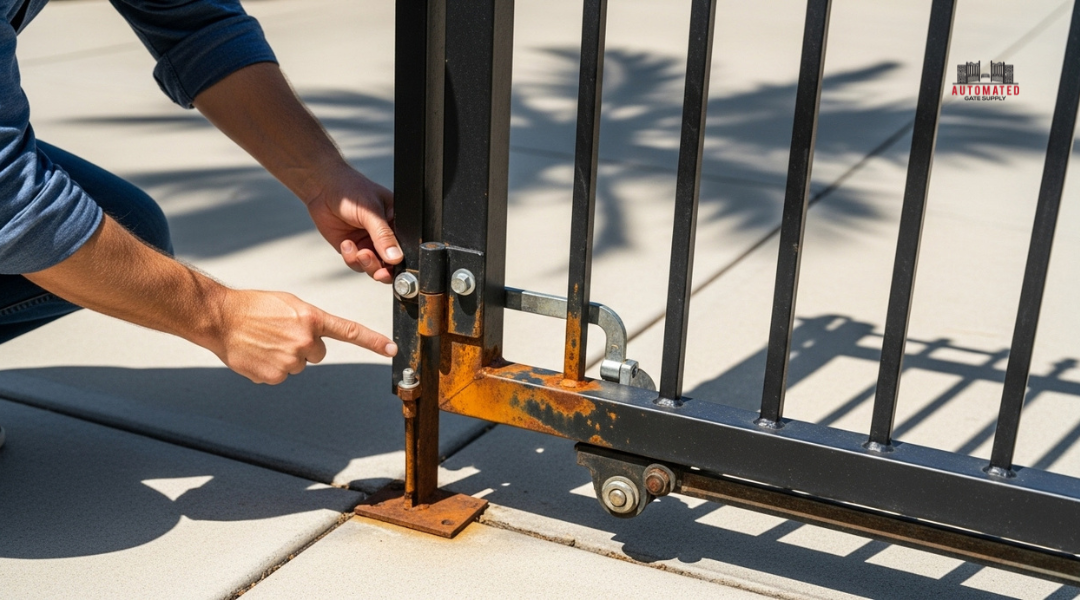
Loose bolts are sneaky culprits that cause gate misalignment. He should run his hand along the frame to feel for any wiggles or rattles and tighten all bolts and screws with a wrench. If any bolts are missing or stripped, replacing them keeps everything tight and secure.
Check Hinges, Rollers, And Brackets
Next up is the moving crew of your gate: hinges, rollers, and brackets. He should start by watching and feeling for smooth movement as the gate opens and closes. Hinges need to be firmly attached with no squeaks. If he hears creaks or notices stiffness, a quick spray of lubricant will ease things up.
Rollers on sliding gates deserve special attention; he should check they’re not cracked or worn out. A brittle roller can cause the gate to stick or derail. Brackets holding these parts should be sturdy, without any obvious bends or damage.
A little mindful inspection here not only keeps the gate looking sharp but also ensures it slides and swings effortlessly through every season.
Step 2 – Keep It Clean And Clear
A gate that’s clean and free of obstacles works smoothly and lasts longer. Dirt, leaves, and grime build up quickly, especially near homes in Los Angeles where wind and dust are common. Taking time to clear the tracks and wash the panels helps prevent damage and keeps the gate looking sharp.
Remove Dirt, Leaves, And Debris From Tracks
Picture a sunny morning in LA, a homeowner leaning down to remove stubborn leaves from their gate tracks. Dirt, small stones, and leaves get stuck in the tracks over time, causing the gate to jam or run unevenly.
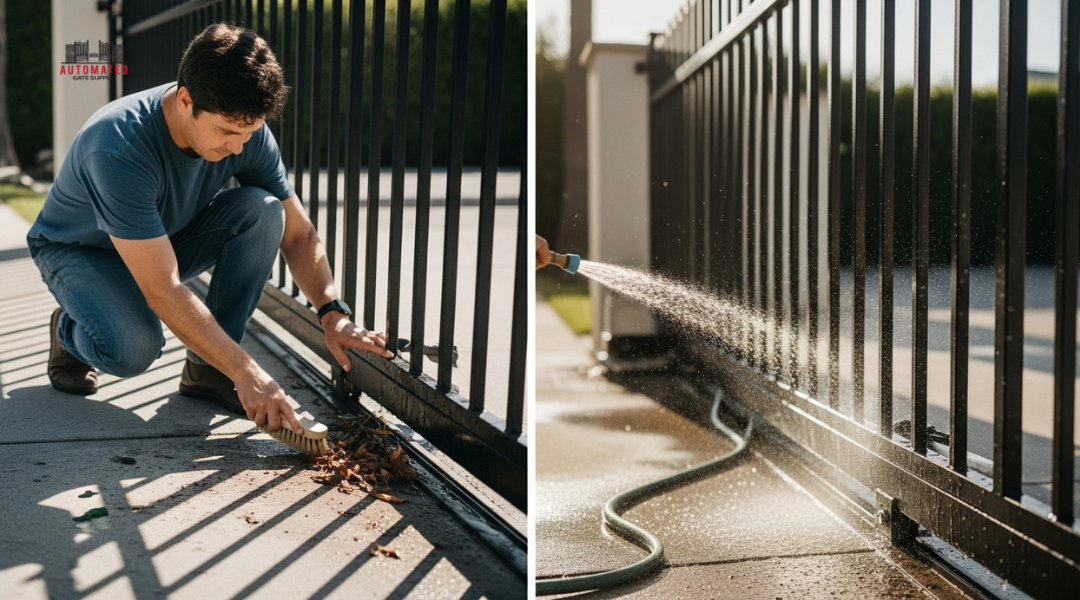
To keep it smooth, they use a small brush or a shop vacuum to clear out debris from the tracks. Then, they wipe the tracks down with a damp cloth to remove dust and grime.
Pro tip: Avoid using water jets directly into the tracks—it can cause rust or damage wiring inside. Instead, use a gentle spray or wipe carefully. Checking and clearing the tracks once a month helps avoid costly repairs and keeps the gate sliding easily.
Wash Gate Panels To Prevent Corrosion
Imagine the same homeowner spraying down their metal gate panels with a garden hose, watching dirt wash away under the warm California sun. Dirt and pollution can stick to the metal and cause corrosion if left unattended.
To prevent this, they wash the panels every 2-3 months using mild soap mixed with water. A soft cloth or sponge does the trick—no harsh scrubbing needed. Rinsing thoroughly and drying the surface afterward stops moisture from lingering, which is a major rust trigger.
Taking these few simple steps keeps electric gates running reliably and looking their best through every season.
Step 3 – Lubricate Moving Parts
Keeping those gate parts slick and smooth is like giving your car an oil change—it helps everything run without a hitch. It’s all about spotting the key spots that get the most wear and using the right lubricant to prevent squeaks, rust, and sticking.
Key Areas To Lubricate
Picture a gate that sticks or groans when opening—annoying, right? The main trouble zones are hinges, rollers, tracks, and locks. Hinges can get rusty or stiff from weather, so they need a good dose of lubrication. Rollers and tracks are constantly moving and rubbing, which wears them down if dry.
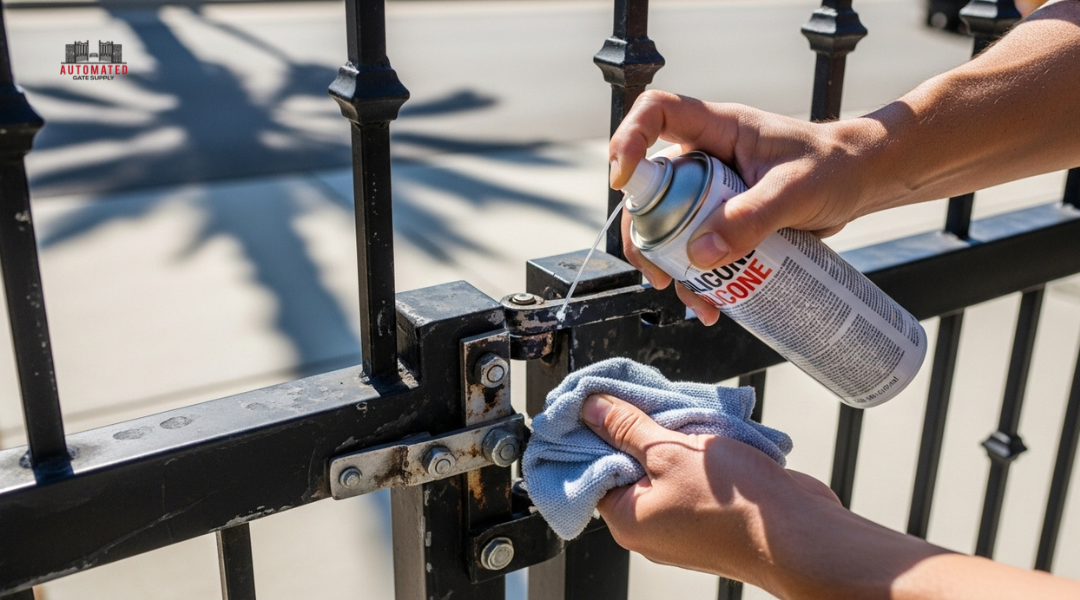
Check the motor arm joints and any mechanical pivots while you’re at it. Use a cloth to remove dirt or old grease first—that lets fresh lubricant work better. A little spray on these spots regularly keeps the gate gliding like butter on toast.
Choosing The Right Lubricant
You want something that won’t wash away with the rare LA rain but also won’t gum up in the heat. Silicone-based spray lubricants are a popular choice because they repel water and dust while staying smooth. Avoid heavy oils that attract grime or thick grease that could slow the gate down.
For metal-on-metal contact, a lithium-based grease works well because it lasts longer, especially on pivot points. But for tracks and rollers, go for lighter sprays—they keep parts moving without clogging.
Here’s a quick chart to help:
| Part | Best Lubricant Type | Why |
|---|---|---|
| Hinges | Silicone spray | Water-resistant, clean |
| Rollers/Tracks | Light spray lubricant | Prevents buildup |
| Motor joints | Lithium-based grease | Long-lasting protection |
If unsure, a quick peek at the gate manual or asking a local hardware store helps nail the right product choice.
Keeping moving parts lubricated saves hassle down the road—your gate will thank you with smooth, quiet swings every time.
Step 4 – Test Your Electric Gate Operator
Keeping your gate running smoothly means spending some time checking how the motor reacts and making sure the safety parts work right. Little tweaks here can keep the whole system humming without hiccups.
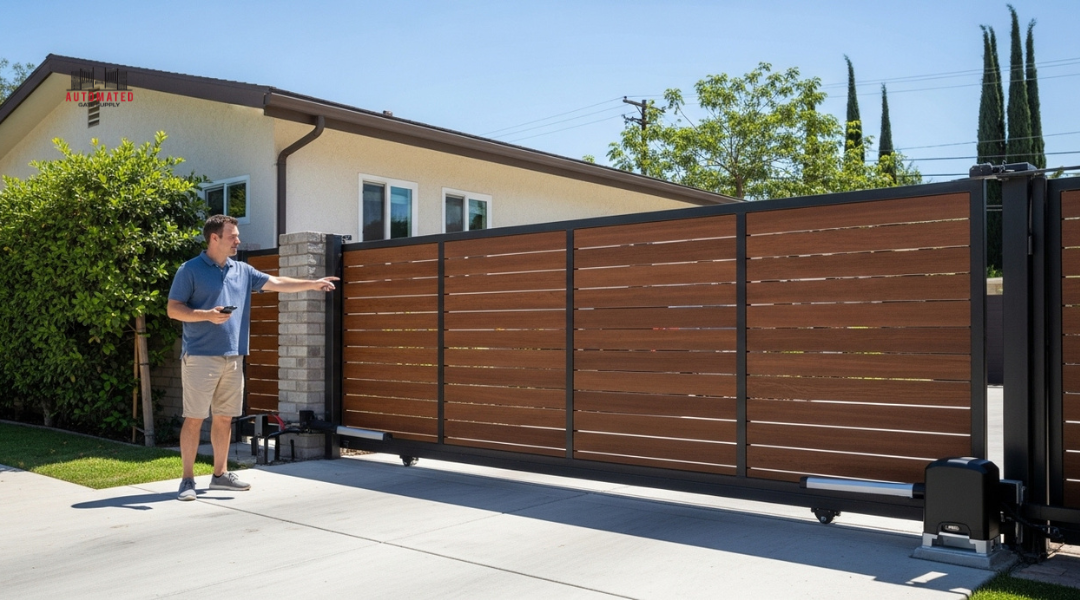
Check Motor Response And Smooth Operation
Picture a homeowner in Los Angeles listening to the soft hum of their gate’s motor on a sunny afternoon. The first thing they do is activate the gate and watch how quickly it moves. If the motor hesitates, makes grinding sounds, or struggles to open or close completely, it may be time for a deeper look.
Steps to follow:
- Listen carefully for any unusual noises like grinding or rattling.
- Watch the gate move slowly at first and then resume normal speed, checking if it stops abruptly.
- Check the motor housing for overheating signs or excessive dust buildup.
- Lubricate moving parts if needed, following the manufacturer’s tips.
Test Safety Sensors And Limit Switches
Imagine the same homeowner watching the gate close slowly, then stopping immediately when a small object crosses its path. That’s the safety sensors and limit switches doing their job, keeping people and pets safe.
Here’s what to do:
- Place a test object, like a cardboard box, in the gate’s path and press the close button. The gate should reverse or stop.
- Check both sides of the gate for sensor cleanliness—dust or spider webs can block signals.
- Manually trigger limit switches to confirm the gate stops at the fully open and fully closed positions. Adjust if necessary.
Pro tip: Clean sensors once a month with a soft cloth to keep them working. Loose wires or dirty lenses are often the culprit if sensors act up.
When the motor runs smoothly and safety sensors respond instantly, the gate will be trustworthy day after day. It’s not just about convenience—it’s peace of mind.
Step 5 – Inspect Access Control Devices
Electric gates have a brain of their own: the access control devices. Keeping these in check means smooth, secure entry every time. From pressing buttons on a remote to punching in codes, these gadgets need regular attention to avoid those frustrating “why won’t it open?” moments.
Keypad And Remote Testing
Picture a sunny morning in Los Angeles, someone clicking their remote or typing on the keypad—and nothing happens. Testing both is a must to make sure they respond right away.
Start by pressing every button on the remote and watching the gate. If there’s a delay, weak response, or no action at all, it could mean the battery is dying or the remote needs reprogramming. Keep an extra set of batteries handy—this simple fix often saves a service call.
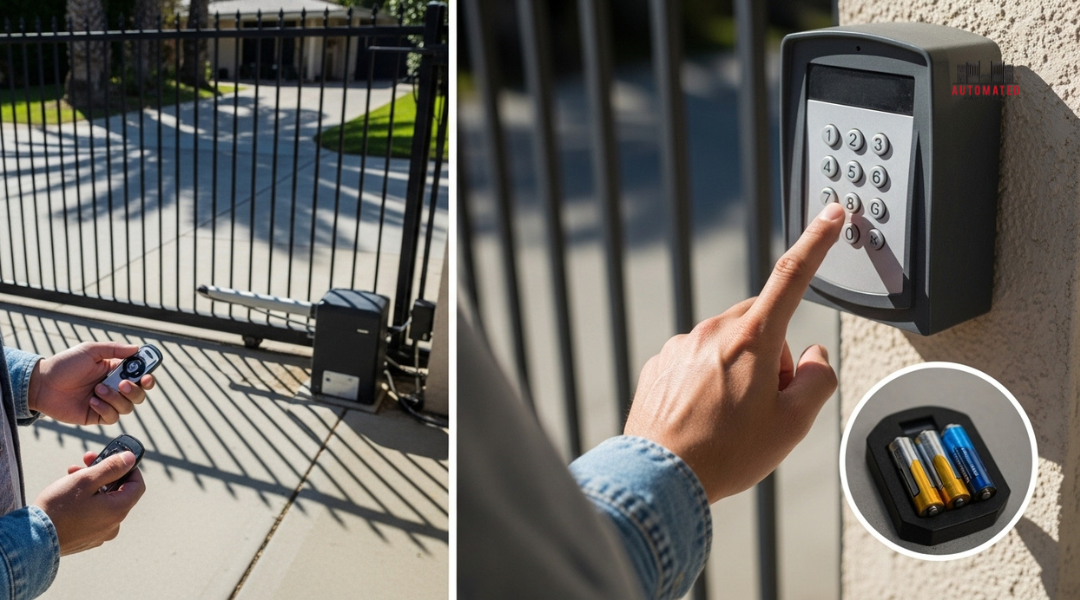
Next, try every key on the keypad. Sticky or unresponsive buttons might need cleaning; a soft brush or compressed air does wonders. Also, double-check that the keypad’s mounting is secure and weatherproofed. Los Angeles sun and rain can play tricks on exposed electronics, so a little TLC goes a long way.
Updating Entry Codes For Security
Imagine your neighbor’s gate code handed out like candy. Over time, too many people might have access, and that’s a security risk.
Start by compiling a list of current users. Remove codes of anyone who no longer needs access, like past contractors or guests. Then, set new entry codes with a mix of numbers that aren’t predictable, such as birthdays or simple patterns.
Changing codes seasonally is smart—think of it as a fresh coat of paint for your security. If the system supports it, enable temporary codes for visitors that expire automatically. That way, no leftover “keys” float around.
Keep a secure record of codes somewhere offline and avoid sharing them over insecure channels like texts or emails. If there’s any suspicion the codes have been compromised, update them immediately to stay safe.
Pro tip: Use a calendar reminder to reset codes every 3-4 months. It’s easier than you think and adds a solid layer of security.
Step 6 – Tighten, Adjust, And Secure
Keeping an electric gate in shape means paying close attention to the little things that hold it all together. Making sure bolts and screws aren’t loose and that the gate lines up perfectly helps avoid bigger headaches later. A few tweaks here and there can save a bunch of time and money down the road.
Tighten Loose Bolts And Screws
Imagine a morning in sunny Los Angeles with a homeowner crouching by their gate, wrench in hand, tightening bolts. Those little screws and bolts can work themselves loose over time, especially with the gate swinging open and closed daily.
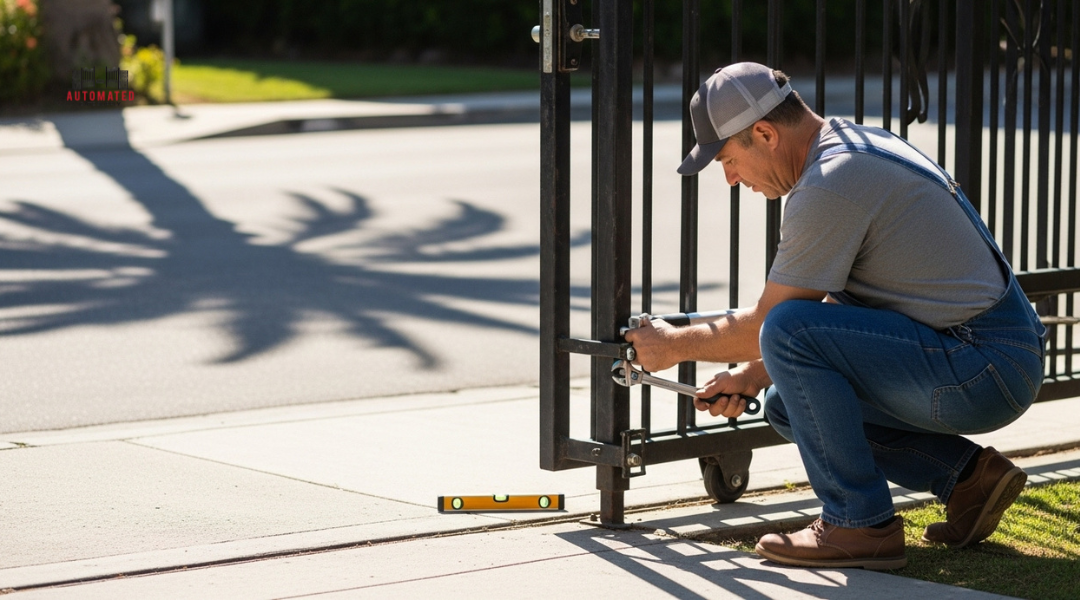
Start by checking every visible bolt and screw on hinges, motor mounts, and brackets. Use the right wrench or screwdriver to snug them up without over-tightening—stripping threads isn’t helpful. If anything feels stripped or damaged, replace it rather than just tightening.
Regularly tightening these fasteners keeps the gate stable and running smoothly. It’s a bit like giving your gate a gentle “hug” to keep it from wobbling and wearing out.
Adjust Sagging Gates For Proper Alignment
Picture this: a gate that’s started leaning like it’s had one too many LA beach parties. Sagging gates not only look sloppy but can mess with the motor, causing strain and uneven wear.
To fix a sagging gate, first inspect the hinge pins and mounting brackets. Sometimes, lifting the gate slightly and tightening hinge bolts can bring it back into line. Other times, it helps to add or adjust shims around hinges or the gate frame to correct the angle.
If the gate has adjustable hinges, use those to fine-tune the alignment. When adjusting, test the gate’s movement regularly to avoid over-correcting. It should swing smoothly without dragging on the ground.
Pro tip: use a level or smartphone app to check vertical alignment. Small adjustments can make a big difference in how the gate functions daily.
Fixing a sagging gate now prevents the motor from working harder and stops that frustrating squeak or scrape that nobody wants to hear every day.
Step 7 – Plan For Seasonal Changes
Adjusting gate maintenance for the changing seasons keeps everything running smoothly and avoids surprises. This step covers handling wetter weather and protecting against the intense sun and salty coastal air in Los Angeles.
Rainy Season Preparations
Imagine a damp morning in L.A., with rain soaking the streets. Gates face moisture that can cause rust and wear on metal parts and electrical components.
Start by inspecting all hinges, locks, and moving parts for rust or buildup. Apply a water-resistant lubricant to prevent corrosion and keep things moving easily. Check weather seals on gate panels and replace any that are cracked or missing to block water from seeping in.
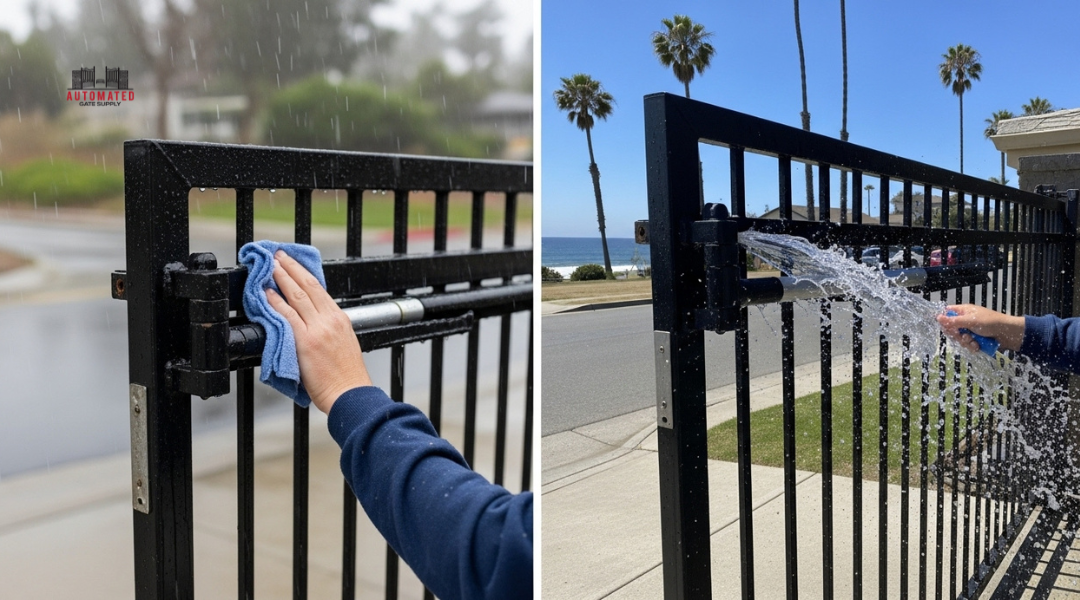
Electrical boxes and motors must be sealed tightly. If not, water can cause shorts or faults. A quick test with a shop towel inside the enclosure can catch leaks fast.
Rain can be a pain, but a little extra care now saves headaches later.
Summer Sun And Coastal Salt Protection
Los Angeles summers bring relentless sun and, if near the coast, salty air that eats away at metal faster than you’d expect.
Start by applying a protective coating or rust inhibitor on all exposed metal parts. Pay extra attention to gates near the beach—they need it more. Regularly rinse salt off with fresh water to keep corrosion at bay.
Check your gate’s paint or finish for chips and touch them up quickly. Sun cracks and peeled paint let rust sneak in.
For electrical parts, ensure tight seals and shade motor boxes if possible; overheating can cause failures.
Tip: Setting a monthly reminder to rinse and inspect gates can keep coastal salt damage in check without much hassle.
A little sunscreen for your gate goes a long way—keeping it looking good and running strong.
When To Call In The Pros
Electric gates can be pretty handy, but sometimes it’s better to bring in an expert than to wrestle with stubborn mechanics or electrical quirks. Knowing when to ask for professional help can save time, avoid damage, and keep your gate running smoothly without headaches.
Signs You Need Professional Help
Imagine a sunny afternoon in Los Angeles where a homeowner notices their gate getting slower or making strange noises. These small changes often signal deeper issues. If the gate isn’t opening or closing completely, hesitates mid-motion, or starts to jerk or stall, it’s time to call a pro.
Other clear signs include faulty sensors, flickering or dead control panels, and unusual sparking near the motor. Rust or physical damage beyond surface scratches also requires expert attention to avoid safety risks. Trying to fix electrical or mechanical problems without the right tools may only make things worse.
How Automated Gate Supply Can Assist
Picture a technician from Automated Gate Supply arriving on a bright Los Angeles morning, ready with tools and knowledge to tackle your gate issues efficiently. They specialize in everything from motor repairs and sensor replacements to full system diagnostics.
They offer scheduled tune-ups tailored seasonally, focusing on preventive maintenance—like lubricating moving parts and checking electrical connections. This hands-on approach helps catch problems before they interrupt your day or turn costly.
Their service usually includes a clear checkup report and warranty-backed repairs, so you can feel confident your gate stays in tip-top shape. If you prefer, they also help set up maintenance plans ensuring hassle-free gate operation all year round.
Helpful hint: Scheduling ahead of seasonal weather changes can prevent common failures caused by heat or dust in Los Angeles.
Final Takeaway
Maintaining electric gates isn’t just about keeping them looking good—it’s about making sure they work smoothly through the year. Paying attention to seasonal care helps avoid surprises and costly repairs, especially in Los Angeles where weather and dust can take a toll. Here’s a straightforward look at the essential maintenance steps and where to turn for expert support.
Recap Of Key Seasonal Maintenance Tips
Picture a sunny Los Angeles afternoon: a homeowner rolls up their sleeves to inspect the gate hinges, motor, and safety features. This simple, regular check can save a lot of headaches.
Start with cleaning. Remove dirt, debris, and spider webs around the tracks and hinges. Dust can gum up the works, especially in dry LA neighborhoods. Next, give the mechanical parts a light oiling—avoid overdoing it to prevent attracting more dust.
Check the gate sensors and safety edges—make sure nothing blocks them and they respond promptly. Test the remote controls and wiring for wear or corrosion. Replacing batteries or faulty parts early keeps the gate from failing when you need it most.
Contact Automated Gate Supply For Expert Advice
Imagine trying to fix your gate’s motor only to realize it needs a professional touch. When the mechanics or electronics go beyond simple tweaks, local experts like Automated Gate Supply in Los Angeles are a call away.
They offer tailored advice that matches your gate’s specific make and model, plus seasonal checkups that spot problems before they grow. Their team understands the quirks of LA’s climate—from salty coastal air to dusty inland heat—that affect gate components differently throughout the year.
Getting expert help doesn’t mean losing control of maintenance. Instead, professionals empower owners by explaining what to watch for and when to schedule repairs. Regular visits from pros also come with warranty benefits, making them a smart investment for peace of mind.