
Your automatic gate operator keeps everyday access smooth and secure—until it doesn’t. When it starts hesitating, grinding, or failing to open, you face a simple but important choice: fix what you have or invest in a new system. You should repair your gate operator when the issue is minor, the system is under ten years old, and parts are still supported; replace it when it’s outdated, unreliable, or beyond cost‑effective repair.
This blog walks you through a clear, practical framework that helps you make that decision with confidence. You’ll see how to recognize failure patterns, weigh the cost and lifespan of your system, and understand what kind of downtime and risk each option involves. By the end, you’ll know how to decide between repair and replacement based on real performance, not guesswork.
With over 20 years in gate automation, Automated Gate Supply shares direct insights from supporting both homeowners and businesses across Los Angeles County. From how operators wear down over time to the realities of part availability and warranty coverage, you’ll gain the knowledge to make the most sensible, long‑term choice for your security system.
Recognizing Failure Contexts And System Boundaries
Understanding how and why a gate operator fails helps you make better repair or replace decisions. A clear view of usage patterns, environment, and system limits lets you identify stress points before they lead to costly downtime or safety issues.
Typical Usage Profiles And Load Conditions
Each automatic gate system operates under a different workload. A residential swing gate that opens ten times per day faces far less stress than a commercial sliding gate cycling hundreds of times. Usage pattern affects not only wear rate but also the lifespan of key components such as motors, chains, and control boards.
Track cycle counts, total run time, and the type of motion (swing, slide, vertical lift). These data help you define the gate’s true operating load and identify when it runs outside the original design rating. For example, an operator intended for light-duty use may show gearbox wear or overheating in moderate traffic applications.
If you keep a maintenance log, compare repair frequency and cost per cycle. When these numbers rise steadily, it often signals that components are operating beyond their intended limits. Over time, high-load demands lower reliability and make replacement a more practical option.
Environmental Exposure And Duty Cycle Limits
Weather and surroundings strongly influence gate operator health. Moisture, dust, salt air, and temperature swings accelerate corrosion and degrade electrical insulation. Outdoor systems near coastal or industrial areas often face power-control failures caused by rusted relays or shorted connectors.
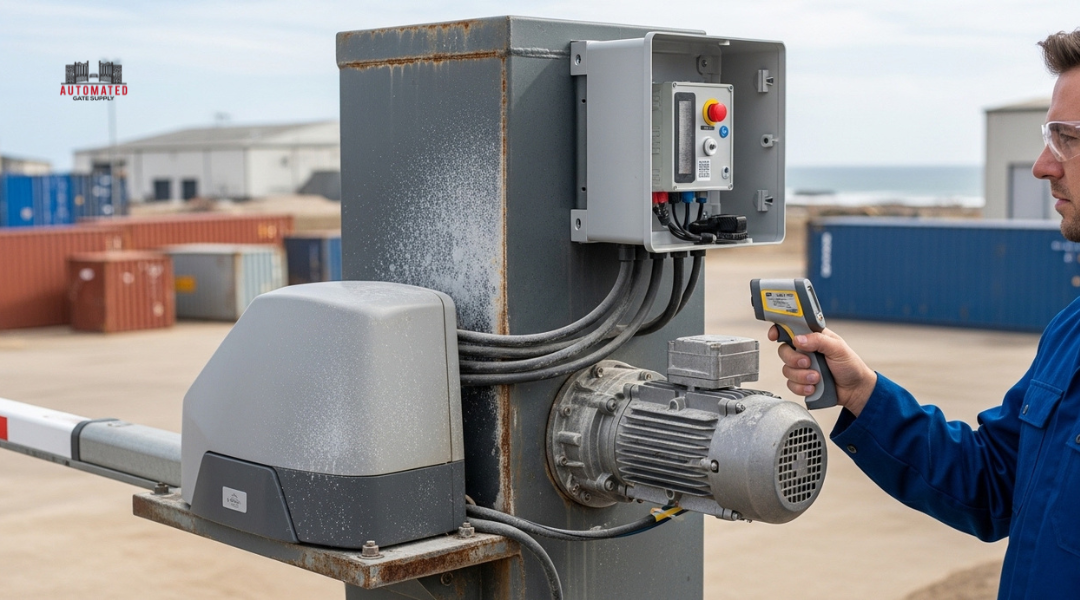
Manufacturers specify duty cycle limits, showing how long a motor can operate before it must rest. Continuous or heavy use beyond this rating causes overheating, bearing wear, and insulation breakdown. Check motor surface temperature and circuit board discoloration during service inspections to spot early signs of overstress.
Simple steps—such as shielding electronics, improving drainage, or fitting enclosures with better seals—can reduce failure rates. When conditions exceed what even improved protection can handle, upgrading to a higher duty-rated operator ensures stable performance and reduces repetitive repair costs.
How Gate Operators Degrade Over Time
Gate operators lose efficiency and reliability as parts wear and electrical components age. You can often delay major failure by recognizing how mechanical and electronic parts break down and by maintaining or updating them before they stop working entirely.
Mechanical Wear Versus Electrical Failure Patterns
Mechanical parts show visible signs of wear first. Chains, gears, hinges, and rollers lose alignment and lubrication after years of daily movement. Eventually, this creates resistance against the motor, making it strain or overheat.
You may notice slower opening speeds, grinding noises, or jerky motion as early symptoms. Weather exposure also plays a major role. Rust and temperature swings expand and contract metal parts, loosening fittings or warping the drive mechanism over time.
Most mechanical failures progress in a predictable pattern:
| Stage | Common Issue | Typical Result |
|---|---|---|
| Initial | Minor friction or noise | Slight delays |
| Midway | Misalignment or tension loss | Repeated jams |
| Late | Motor overload | Failure to operate |
Routine greasing, bolt tightening, and inspection every 6–12 months slow this wear cycle, extending both safety and performance.
Control Board Aging And Compatibility Drift
The control board functions as the “brain” of your gate operator. Over time, capacitors dry out, solder joints crack, and connectors corrode, leading to inconsistent signals. In older models, each failed component increases the risk of system-wide malfunction.
Technology changes also create compatibility drift. Newer sensors, keypads, and remote units often use updated communication protocols that older boards can’t interpret. Even if older boards still operate, they may reject or misread these signals.
Heat and electrical surges accelerate the decline of circuit boards. To prevent data loss and random resets, keep the control box sealed against moisture and install surge protection. Once repair costs or part scarcity rise, board replacement typically becomes the only practical solution.
Repair Viability Versus System Replacement Thresholds
Gate operators fail for many reasons, but the decision to repair or replace them often comes down to cost efficiency and compliance with safety requirements. You need to weigh the total cost of repairs over time against the reliability and safety of a new system to make the most practical choice.
Cost Stacking And Diminishing Repair Returns
Each service call, part replacement, or adjustment adds to your gate operator’s lifetime cost. When these costs begin to approach 70–75% of the price of a new unit, replacement usually becomes the better financial option. This is sometimes called the repair-versus-replacement threshold.
A useful comparison is shown below:
| Repair Cost (% of Replacement) | Recommendation |
|---|---|
| Under 50% | Repair is usually justified. |
| 50–74% | Evaluate condition and usage. |
| 75% or more | Replacement is more cost-effective. |
You should also consider downtime costs, especially for gates used in commercial or multi-unit settings. A gate that frequently breaks down can interrupt operations and increase maintenance calls. A gate repair technician can help you track repair history and identify patterns that signal a deeper performance decline.
If the motor, gearbox, or control board fails repeatedly despite recent servicing, continuing to invest in repairs produces diminishing returns. At this point, replacing the entire system often saves you both time and long-term expense.
Safety Compliance And Evolving Standards
Gate operators must function within strict safety standards, such as those defined by UL 325 and local building codes. A system that no longer meets these standards can expose you to legal or injury risks, even if it still runs.
New models often include updated safety sensors, soft-start controls, and entrapment protection features that older systems lack. If retrofitting these components costs nearly as much as replacing the operator, replacement becomes the smarter choice.
You should regularly verify the age and compliance status of your gate system. A qualified gate repair technician can perform a safety audit and identify deficiencies like inadequate stop force or missing edge sensors.
When regulations or technology shift, keeping an outdated operator may not be worth the risk. Updating to a compliant, efficient system helps maintain safety and reliability for years to come.
Interpreting Downtime, Risk, And Lifecycle Tradeoffs
When your gate operator fails, every hour offline adds cost and inconvenience. The best decision balances how long your system can remain down, what failure risks you face, and how repair or replacement affects total lifecycle cost. These tradeoffs shape both maintenance priorities and budget use.
Operational Disruption Across Residential And Commercial Sites
Downtime impacts depend on where and how the gate is used. A residential gate may cause frustration or minor security risk, while a commercial or multi-tenant site can lose access control, delay deliveries, or disrupt traffic flow. Even a few hours of inoperability can create safety or liability concerns in monitored entry locations.
Use a short assessment to gauge impact:
| Site Type | Typical Downtime Cost Drivers | Tolerance for Outage |
|---|---|---|
| Residential | Convenience, limited security | Moderate |
| Commercial | Access control, business flow, liability | Low |
If your gate supports deliveries, contractors, or tenants, lead time for replacement parts becomes a key metric. Delays greater than one week can outweigh the cost savings of a short-term repair. Consider stocking critical components or prequalifying a service vendor to keep outages below acceptable thresholds.
Short-Term Fixes Versus Long-Term System Stability
A low repair quote may seem attractive, but short-term fixes often do not improve mean time between failures (MTBF). When repairs only postpone the next breakdown, you face recurring service calls, rising downtime costs, and inconsistent gate performance.
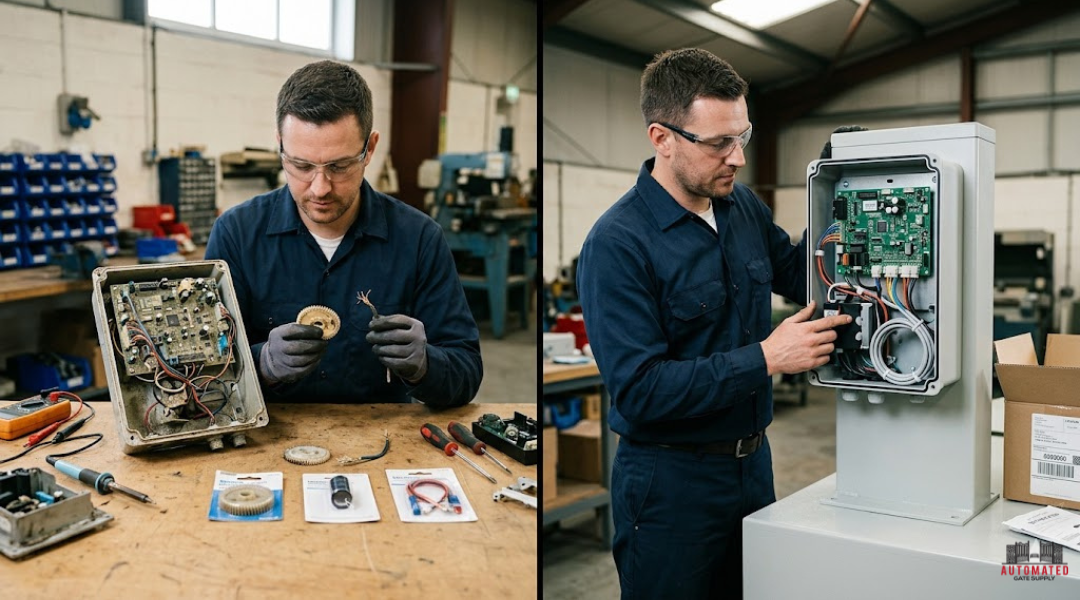
Think in terms of lifecycle value rather than immediate price. If a rebuild significantly extends service life or restores reliability, it usually provides better long-term stability than a patch. Replacement becomes the better option when repair costs exceed about 50% of the new unit price, the model becomes obsolete, or repeated failures cause extended downtime.
Weigh whether a repair restores dependable operation or simply resets the clock on an aging system. Aim for actions that lower unplanned outages and keep your gate operating safely and predictably over its full lifecycle.
Insights From Automated Gate Supply Inventory And Support Realities
Your decision to repair or replace a gate operator often hinges on two practical factors: how easily you can access compatible parts and how long the manufacturer continues supporting that model. Supply limitations and support gaps can shift an affordable repair into an impractical one quickly.
Parts Availability Across Legacy And Current Models
Parts access greatly affects repair feasibility. If your gate operator uses standard components—such as relays, sensors, or control boards—sourcing replacements from specialized suppliers is usually straightforward. However, legacy systems often depend on discontinued or proprietary parts that few distributors still carry.
Specialized gate suppliers often maintain “legacy shelves” with components for older systems, but these supplies are finite. Once that inventory is depleted, repairs involve fabricating parts or converting systems, which increases labor costs. Maintaining a list of current component crossovers helps you plan replacements in advance.
| Part Type | Common Availability | Notes |
|---|---|---|
| Limit Switches | High | Standard across many models |
| Control Boards | Medium | Varies by brand and release year |
| Drive Motors | Low for legacy units | Often replaced as full assemblies |
When essential parts are scarce or incompatible with current safety standards, replacement becomes the more practical option. Consistent access to same-day parts keeps downtime short and prevents unnecessary service delays.
Manufacturer Support Cycles And Replacement Feasibility
Manufacturers phase out gate operators after a set period, usually 8–12 years, depending on demand and technology updates. Support cycles include firmware updates, safety certifications, and replacement part production. Once a model exits support, warranties expire, and OEM parts become limited.
You should verify whether your operator’s model number appears on the manufacturer’s active support list. If not, repair may only serve as a temporary fix. The lack of future updates or compliance changes can expose you to safety or code issues.
Some brands, like LiftMaster or Doorking, offer upgrade kits that align older systems with modern controllers and accessories. These transitional options reduce cost while extending service life. When full replacements become unavoidable, working with a supplier that tracks manufacturer cycles ensures better timing and avoids unexpected equipment obsolescence.