
When you compare quotes for a new gate system, the lowest price can look appealing. A few hundred dollars saved upfront seems smart—until the costs start showing up later in breakdowns, repairs, and replacements. What contractors wish you knew is that cheap gate operators rarely stay cheap once maintenance, downtime, and safety risks come into play.
Low-cost systems often use smaller motors, light gears, and basic controls that struggle under daily use or rough weather. You may not notice the difference at first, but these shortcuts shorten the lifespan of the equipment and increase long-term expenses. That’s why experienced installers emphasize total cost of ownership over the sticker price.
At Automated Gate Supply, years of working with contractors across Los Angeles have shown how budget operators can fail early and drive up service calls. Understanding these hidden costs helps you protect your property investment, choose better hardware, and avoid paying twice for the same gate automation.
Where Low-Cost Gate Operators Seem Sufficient
You might think a low-cost gate operator fits your needs when managing a small property or seeking a quick home improvement. These systems can meet simple demands for limited use, especially when you only need basic access control without high traffic or advanced features.
Residential Light-Duty Use Versus Sustained Access Demand
A budget gate operator often performs well in light-duty residential settings. If you open your gate only a few times a day and the gate is lightweight, the strain on the motor and hardware remains low. Under these conditions, a cheaper unit can operate reliably for a while without major issues.
However, problems arise when that same operator faces sustained or frequent use. Continuous opening and closing, typical at shared driveways or gated communities, wears out lightweight components quickly. Motors designed for fewer cycles per day may overheat or fail early.
| Use Type | Typical Frequency | Recommended Operator Type |
|---|---|---|
| Single-family home | 2–10 cycles/day | Light-duty or mid-range |
| Multi-home driveway | 20–50 cycles/day | Heavy-duty or commercial |
| Business access | 50+ cycles/day | Industrial-grade |
Choosing based only on a cheap quote can lead to greater long-term expense when frequent access causes breakdowns or repair needs.
When Minimal Automation Expectations Shape Buying Decisions
Sometimes you only expect your gate to open with a remote and close behind you. For such minimal automation, a low-cost operator can appear to deliver enough performance at a low entry price. Models in this range handle small gates, standard swing designs, and moderate weather exposure.
The trade-off comes when you need more than the basics. Features like smart controls, safety sensors, or battery backup are limited or absent in low-end systems. You may later find these features necessary for reliability and safety, adding more cost through upgrades.
If your home improvement priorities focus mainly on appearance and budget, the cheapest option might seem efficient. But when you start demanding convenience, durability, and consistent operation, those cost savings fade quickly under maintenance and replacement costs.
Internal Limitations of Budget Gate Operator Systems
Cheap gate operators often fail from within. Their weak mechanical and electronic designs limit how much weight they can move, how long they can run, and how accurately they respond to changing conditions or faults. These limits reduce reliability and raise long-term maintenance costs.
Motor Capacity, Thermal Limits, And Duty Cycle Gaps
Lower-end operators often use undersized motors and inferior materials that cannot handle heavy gates or frequent use. A typical budget unit might only support a light residential swing gate, not a reinforced steel or wide sliding gate. When pushed past capacity, the motor overheats, shortening its lifespan.
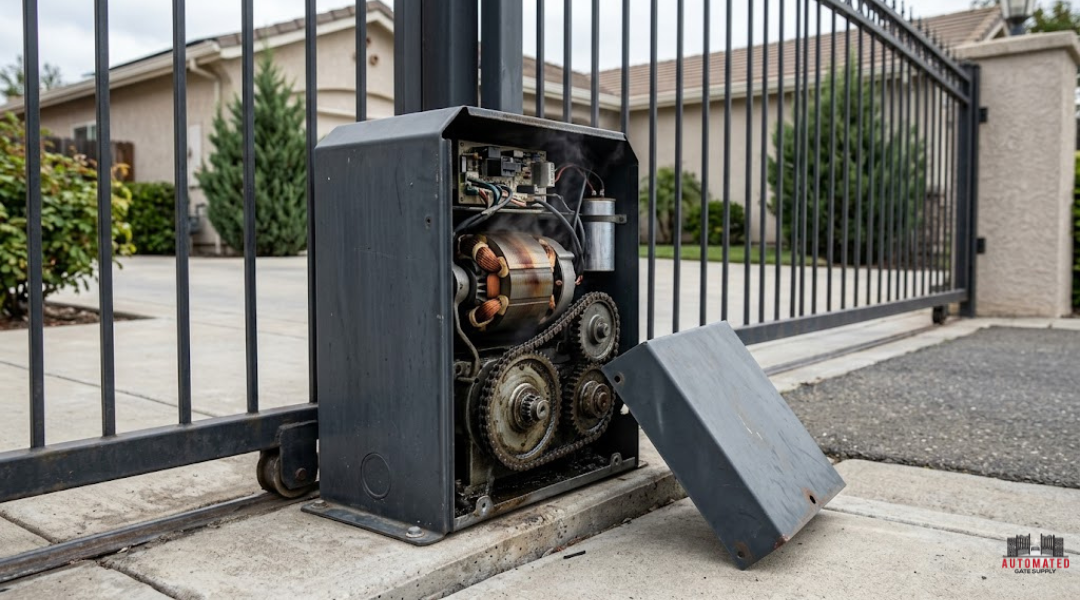
The thermal protection in many discount models is basic or missing. Once the windings reach a set temperature, the system shuts down until it cools. If you have multiple entries or frequent traffic, those pauses become frequent interruptions.
A limited duty cycle—often rated below 30%—means the operator must rest more than it runs. Higher-end models built with quality materials and better heat management can handle 50–100% duty cycles for steady performance. When comparing options, look for specifications showing continuous-duty operation and verified load ratings.
| Component | Budget System | Professional System |
|---|---|---|
| Motor Type | Light-duty AC/DC | Continuous-duty AC/DC |
| Duty Cycle | <30% | 50–100% |
| Thermal Design | Basic cutoff | Dynamic cooling |
Control Systems With Restricted Programmability And Diagnostics
Many low-cost control boards have limited logic and non-adjustable parameters. You often can’t fine-tune acceleration, deceleration, or obstruction sensitivity beyond preset levels. That lack of control leads to jerky starts and stops, which strain both the motor and gate hardware over time.
Budget units also skip advanced self-diagnostic functions that detect faults like low voltage or sensor misalignment. Without these alerts, you may not know what caused a failure, forcing trial-and-error repairs. High-quality controllers, by contrast, offer event logs, error codes, and programmable relays that support smooth operation and quick service.
Some systems also restrict compatible accessories, such as safety beams or access readers, limiting future upgrades. Paying for a flexible controller with open connections and diagnostic feedback helps you maintain your gate efficiently and adapt to new automation needs.
Cost Creep Through Maintenance And Early Failure Cycles
Cheap gate operators often cause ongoing financial strain long after installation. Frequent part replacements, extended repair visits, and mismatched components can raise total ownership costs far beyond the original estimate. These small but repeated expenses usually appear outside the initial payment schedule and can quickly outpace the cost of a quality system installed by a licensed and insured contractor.
Repeated Part Replacements And Compounding Service Intervals
Low-cost gate operators often use light-duty motors, gears, and electronic controls not designed for continuous use or harsh weather. After only a short time, these parts begin to wear out, forcing you into a cycle of service calls and replacements. Each visit adds new charges for travel, labor, and materials that rarely come with a written warranty.
Homeowners sometimes rely on unlicensed or uninsured contractors for these small fixes because they appear less expensive upfront. That shortcut frequently leads to mismatched components or improper calibration, which accelerates the rate of failure. Over time, the maintenance cycle becomes shorter—what once needed service every two years might require it twice a year.
When you compare these ongoing costs to an operator designed and installed by a licensed contractor, the numbers tell a clear story: cheaper systems carry higher lifetime maintenance costs. A well-built and properly serviced operator, though more expensive at installation, generally stays reliable for a decade or longer with predictable upkeep.
Labor Inefficiencies From Non-Standard Or Incompatible Components
Cheap operators often depend on generic or outdated parts that are difficult to source. Technicians spend more time locating substitutes or adapting incompatible pieces, increasing labor charges and extending project timelines. When a part doesn’t fit perfectly, performance suffers, and other system components begin to wear unevenly.
A licensed contractor with proper project management avoids these labor inefficiencies by using standardized parts with manufacturer support. This keeps your gate system under a consistent maintenance plan rather than repeated emergency repairs. In contrast, unlicensed contractors may cut corners during installation, leading to missed deadlines and unpredictable repair costs later.
Such inefficiencies compound quickly. A single difficult repair may double in price because of added labor hours, rescheduling fees, or new damage from improper handling. Reliable, compatible hardware drastically reduces that risk and keeps service predictable and affordable.
Interpreting Long-Term Cost Versus Initial Savings
A gate operator that seems inexpensive often leads to higher expenses over its lifespan. The upfront discount hides costs linked to repairs, poor reliability, and safety issues that can reduce long-term value and increase the total cost of ownership.
Lifecycle Cost Compression Versus Extended System Reliability
Cheaper gate operators often achieve “cost compression” by using weaker motors, low-grade wiring, or minimal corrosion protection. These shortcuts shorten the system’s life and create recurring maintenance needs. What appears as savings at purchase can turn into hidden fees such as replacement parts, emergency service calls, and downtime.
A quality operator typically lasts longer because of stronger internal components, weather‑resistant housings, and reliable automation controls. Paying more up front supports a lower cumulative cost over time. Regular servicing and longer warranty coverage further protect your investment and stabilize running costs.
Consider how long a unit performs before major repair is required:
| Operator Type | Average Lifespan | Expected Maintenance Costs (10 yrs) |
|---|---|---|
| Budget Model | 3–5 years | High (frequent part replacement) |
| Professional-Grade | 10–15 years | Low to moderate (routine checkups) |
Reliable systems also improve energy efficiency and reduce power demand, adding another layer of long-term savings.
Safety Risks, Liability Exposure, And Compliance Implications
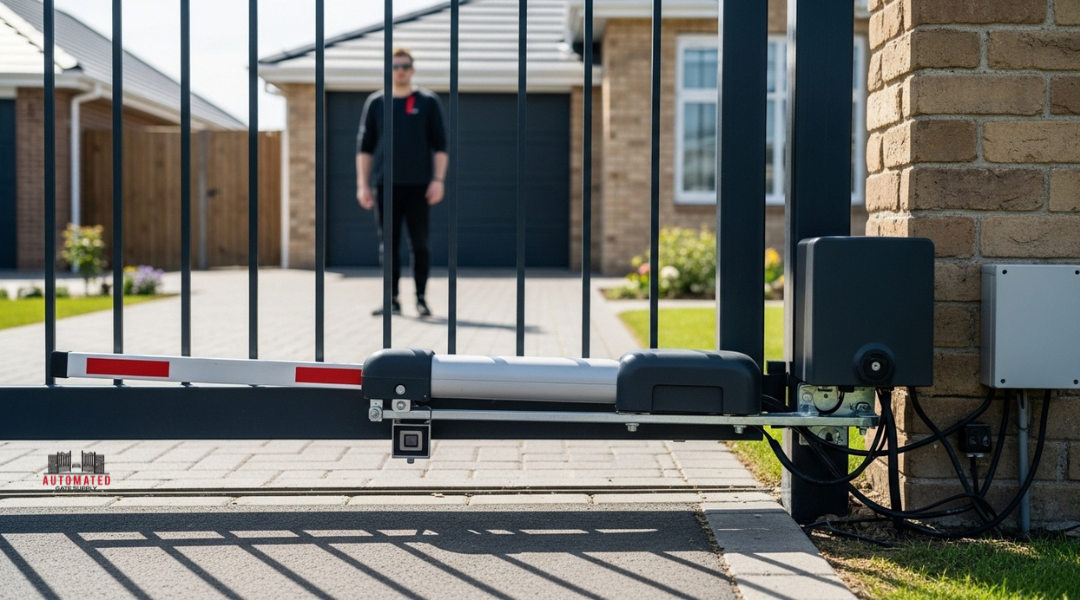
Lower-priced gate operators frequently skip essential safety hardware like pinch sensors, photo eyes, or overload protection. Missing these features can lead to personal injury, property damage, and liability exposure for the homeowner. When an incident occurs, the cost of non-compliance far exceeds any purchase savings.
Poor-quality installations may break building codes or lack proper code compliance documentation. Violations can trigger fines, insurance claim denials, or reinstallation requirements. Electrical shortcuts, unsafe wiring, or failure to follow recognized safety standards are common sources of hidden costs.
Choosing a model that meets or exceeds national safety and building standards guards against mechanical failure and code violations. You not only reduce long-term risk but also ensure legal protection and reliable daily operation.
What Automated Gate Supply Observes In Product Lifecycles
Product reliability often depends less on marketing claims and more on how well the manufacturer supports its systems over time. Differences in technical backing, spare part availability, and inventory habits often reveal how long a gate operator will remain serviceable after installation.
Differences In Manufacturer Support And Parts Continuity
When you choose between a budget and a reputable gate operator, manufacturer support is where the gap becomes obvious. Established makers keep detailed documentation, offer technical help, and maintain compatible parts across product generations. This consistency lets you replace components years later without changing the entire unit.
Low-cost manufacturers may not follow the same standards. Once a model is discontinued, replacement boards or motors can become unavailable. In some cases, imported private-label devices use generic control boards that vary from batch to batch, making troubleshooting difficult and costly.
You can easily compare long-term support through these factors:
| Factor | Established Brand | Low-Cost Import |
|---|---|---|
| Parts Availability | 8–15 years | Often ends within 2 years |
| Technical Support | Full schematics, phone/email help | Limited or none |
| Backward Compatibility | Frequently supported | Rarely supported |
Consistent parts continuity lets your system stay in service longer, lowers lifetime costs, and simplifies maintenance planning.
Inventory Turnover Patterns Across Low-Cost Versus Established Brands
You can spot early warning signs of reliability by watching how inventory moves through distributors. Reputable brands control turnover carefully, keeping steady stock levels for standard components. This ensures that installers can source motors, sensors, or boards without project delays.
Low-cost brands often appear in bulk for short periods and disappear once lots sell out. Distributors take advantage of short-term pricing but rarely reorder the same model again. This pattern leaves contractors and owners without matching hardware later.
Fast model turnover can lead to mismatched systems, incomplete repairs, and loss of warranty coverage when substitute parts fail to meet specifications.
Indicators of stable supply include:
- Continuous item codes across product revisions
- Official distribution agreements
- Predictable lead times for core parts
Watching these patterns helps you choose equipment designed to stay supported through its full operational life.