
Living near the Pacific means enjoying ocean views and coastal breezes, but it also means dealing with salt air that quickly corrodes metal surfaces and weakens gate hardware. You’ve likely seen hinges rust, operators seize, and finishes peel long before their time. To make your investment last in Santa Monica and Pacific Palisades, you need coastal gate packages designed with materials and coatings that resist corrosion from the start.
These environments demand more than standard steel hinges and chain kits. Marine-grade stainless steel, reinforced coatings, and sealed operators make the difference between smooth performance and frequent repairs. Understanding how salt air accelerates wear and identifying which hardware combinations offer real coastal durability will help you choose equipment that stands up to the challenge.
When you work with a supplier that understands local conditions—like Automated Gate Supply in North Hollywood—you gain access to components proven in the toughest coastal zones. Their complete gate operator packages, corrosion-ready brackets, and weather-sealed parts keep your gates running reliably whether you’re perched above the bluffs or steps from the shoreline.
Salt Air Corrosion Mechanisms
In Santa Monica and Pacific Palisades, ocean wind carries microscopic salt particles that cling to metal surfaces. These deposits trigger corrosion through chemical reactions that break down protective layers, pit the surface, and weaken gate components over time. The process depends on airflow, humidity, and the materials used in hinges, fasteners, and frame assemblies.
Chloride Exposure and Electrochemical Oxidation Processes
Salt air contains chloride ions that act as catalysts for corrosion. When metal surfaces trap moisture, these ions dissolve and form an electrolyte film that conducts electricity. This film allows electrons to move between anodic and cathodic areas on the metal surface, starting electrochemical oxidation—or simple rust.
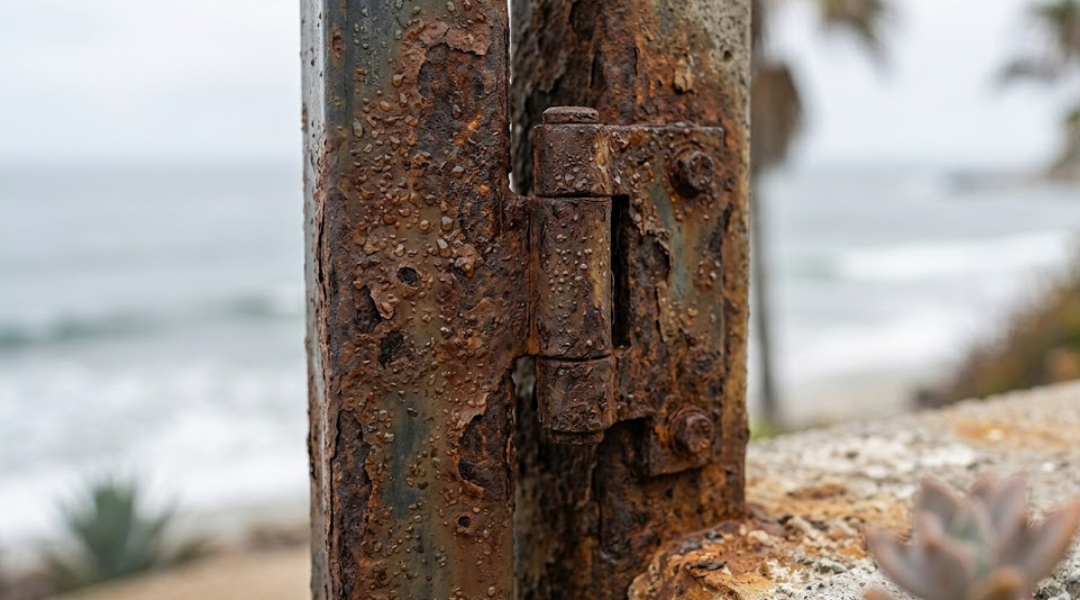
In this process, iron atoms lose electrons and bond with oxygen to form iron oxides. Stainless steels with adequate chromium content develop a thin passive film that can delay this reaction, but persistent chloride contact eventually penetrates it. The result is pitting and localized attack that spreads beneath the surface coating.
Frequent rinsing with fresh water and good airflow interrupt the electrolyte layer, slowing oxidation. Without these steps, even small chloride deposits can create corrosion cells within weeks.
Material Degradation Rates Across Metals and Coatings
Not all metals break down at the same pace under salt exposure. Laboratory tests such as ASTM B117 salt spray analysis show that mild steel fails in less than a few hundred hours, while 316 stainless steel may resist visible pitting for over 1,000 hours.
| Material | Relative Corrosion Resistance in Coastal Air | Notes |
|---|---|---|
| Mild Steel | Very Low | Rusts within months if uncoated. |
| Galvanized Steel | Moderate | Zinc layer corrodes first, acting as sacrificial protection. |
| 304 Stainless Steel | Good | Resists rust briefly but pits under salt buildup. |
| 316 Stainless Steel | Excellent | Best alloy for marine gates. |
| Aluminum (powder coated) | Good | Stable if coating remains intact. |
Coating quality matters as much as metal grade. Powder coats or PVD finishes with uniform thickness can delay corrosion by sealing out moisture. However, chips or scratches expose the base metal and start rapid oxidation—even on high-grade alloys.
Environmental Variables Affecting Corrosion Intensity
Distance from the shoreline determines how much chloride exposure your gate receives. Within a quarter mile of the beach, direct ocean spray and high humidity cause continuous saltfilm buildup. Beyond one to three miles, airborne chloride levels drop sharply, and basic outdoor-rated hardware usually performs better.
Temperature swings, rainfall frequency, and wind direction also affect corrosion speed. Warm, moist air accelerates oxidation, while regular rinsing by rain can provide partial cleaning. Constant fog or marine layer conditions, common in Pacific Palisades, keep surfaces wet longer, extending electrochemical activity.
Shaded or enclosed gate components remain damp for hours, making them more vulnerable than sun‑exposed surfaces. Designing for airflow, routine rinsing, and careful material selection are the most reliable ways to control salt air corrosion in these environments.
Selecting Materials and Coatings for Coastal Durability
Coastal environments like Santa Monica and Pacific Palisades expose every gate component to salt, humidity, and wind-blown debris. Materials and surface treatments that resist corrosion extend equipment life, reduce failures, and prevent staining from rust runoff. Using marine-rated alloys and coatings ensures a gate system that remains functional and presentable for many years.
Stainless Steel Grades and Marine-Rated Components
Choosing the right stainless steel grade matters most when designing for salt air. 316 stainless steel, known as marine-grade, contains molybdenum, which resists chloride corrosion better than 304 stainless. You’ll find 316 used for hinges, bolts, and brackets on steel gates and aluminum gates, where corrosion often starts.
| Grade | Typical Use | Salt Resistance | Relative Cost |
|---|---|---|---|
| 304 | General stainless hardware | Good | $$ |
| 316 | Marine and coastal gates | Excellent | $$$ |
Use the same metal type for all fasteners where possible. Mixing stainless with dissimilar metals like plain steel or brass can cause galvanic corrosion. Hardware labeled marine-grade or UL 325-compliant generally meets the protection standards for outdoor gate systems, offering both structural durability and electrical safety.
Marine-rated electrical parts use sealed connectors, moisture-resistant cables, and IP65 or higher enclosures to keep salt air from penetrating motors or control boards. Selecting those components from the start limits long-term maintenance and prevents performance loss.
Powder Coating Versus Galvanization Performance Differences
The finish you choose affects how your gate handles coastal exposure. Powder coating protects aluminum and steel from oxidation, but small chips can allow salt to creep under the coating. Over time, that can lead to bubbling or flaking. A marine-grade powder coating with a thicker primer layer performs better at resisting this intrusion.
Hot-dip galvanized steel creates a zinc barrier that corrodes first, preserving the underlying metal. This process suits traditional steel gates when you want both durability and a classic wrought-iron appearance. For best results, use galvanized steel followed by powder coating, combining sacrificial and sealed protection layers.
Aluminum gates, especially those made from marine-grade aluminum, rarely need galvanization since aluminum naturally resists rusting. However, applying a powder coat improves appearance and slows surface oxidation, giving a consistent color finish in salty air.
Hardware Sealing and Enclosure Protection Standards
Every hinge, motor, and enclosure must keep moisture and salt crystals out. Hardware sealing prevents corrosion from reaching moving parts and electrical systems. Even the best materials fail quickly if joints allow salt mist inside.
Look for gate operators and control boxes rated NEMA 4X or IP66, which means they’re weatherproof and corrosion resistant. These standards test for water intrusion and material breakdown under coastal exposure. You can also add rubber gaskets, silicone-sealed junctions, and drain holes that stop salt buildup.
Electronics protected by conformal coatings on circuit boards resist damage from airborne salts. Enclosures made from 316 stainless steel or coated aluminum offer additional defense without constant refinishing. Regular inspection of seals and housings ensures continued coastal durability and steady gate operation throughout the year.
Assessing Lifespan, Upkeep, and Failure Tradeoffs
Coastal gate systems face constant exposure to moisture, high salinity, and temperature swings. You must balance upfront material cost with service life, account for frequent maintenance needs, and anticipate how salt exposure shortens the lifespan of key components like motors and hinges.
Initial Material Cost Versus Long-Term Replacement Cycles
Materials that perform well inland often fail early near the ocean. In coastal zones, marine-grade stainless steel (typically 316 alloy) and powder-coated aluminum resist corrosion far better than mild steel or galvanized parts. These choices come at higher upfront cost—sometimes 30–50% more—but they extend replacement cycles and reduce emergency repair calls.
Even the best hardware requires sound design. Avoid mixed metals, since galvanic corrosion can occur when dissimilar materials contact in salty environments. Gate frames, hinges, and mounting bolts should share similar corrosion-resistant ratings.
If you plan to add electric gate operators or access control systems, choose models with sealed housings and weatherproof connectors. Spending a little more on coastal-rated parts lowers the total cost of ownership over ten years or more. A basic table helps outline tradeoffs:
| Material Type | Relative Cost | Average Lifespan (Coastal) | Corrosion Resistance |
|---|---|---|---|
| Galvanized Steel | Low | 3–6 years | Moderate |
| 304 Stainless | Medium | 6–10 years | Good |
| 316 Stainless | High | 10–15 years | Excellent |
| Aluminum (Powder-Coated) | Medium | 8–12 years | Very Good |
Preventive Maintenance Intervals in High-Salinity Zones
You can extend any gate system’s life with a clear maintenance schedule. In high-salinity air, metal surfaces accumulate salt residue that traps moisture and speeds corrosion. Wipe down exposed areas monthly and rinse hardware using fresh water after storms or fog-heavy weeks.
Schedule a full inspection every six months. Lubricate hinges and pivot points with non-petroleum, corrosion-inhibiting grease to avoid buildup that attracts grit. For gate operators, remove dust and salt from motors and check for worn seals. Battery terminals in access control units or video intercoms should be cleaned twice a year.
You may also want to log maintenance activities. A small record tracking inspection dates, lubrication points, and part replacements helps predict when parts are nearing failure. Timely minor repairs prevent the expensive full replacements that often follow neglected upkeep.
Failure Points in Motors, Hinges, and Exposed Electronics
Coastal failures often begin with corrosion at hidden points. Hinges and posts trap moisture in small gaps, and saltwater intrusion can seize bearings or bolts. Once a hinge binds, the motor must strain harder, accelerating internal wear. Lubrication helps, but replacing aging hardware before stiffness occurs keeps moving parts aligned.
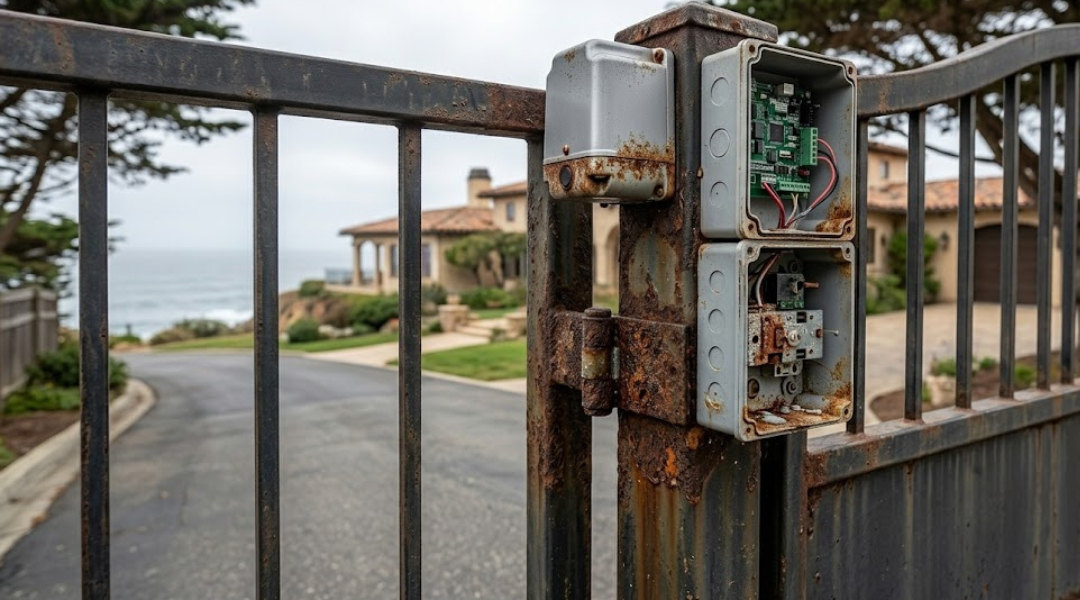
Gate operators suffer from exposure to salt-laden air drawn through ventilation ports. Choose sealed or weather-rated models, and mount them several inches above ground to avoid puddles. If possible, use protective covers that permit airflow but block spray.
Exposed electronics—including access control panels, Knox boxes, and video intercoms—need tight seals around wiring and conduits. Moisture can short out circuits even when casings appear intact. Inspect gaskets annually and use dielectric grease on low-voltage terminals. Consistent checks ensure that your security systems respond reliably despite harsh marine conditions.
Installation Constraints in Santa Monica and Pacific Palisades
Projects in Santa Monica and Pacific Palisades often face practical limits tied to environmental exposure, local permitting rules, and uneven coastal ground conditions. Gate installation requires careful selection of hardware and thoughtful site preparation to prevent early wear or code violations.
Wind Load, Sand Intrusion, and Moisture Exposure Factors
Oceanfront winds in these areas can exceed 40 mph during seasonal storms. You need hinges and posts tested for higher wind load ratings to prevent sagging or vibration. Lightweight aluminum or high-grade stainless steel supports reduce stress on motors and joints.
Fine sand carried from nearby beaches collects inside tracks and around gate rollers. You should choose sealed bearing systems and schedule frequent cleaning to keep parts moving freely. Using bottom tracks slightly elevated above grade helps prevent sand buildup.
Moisture also affects motor housings and control boards. Look for NEMA 4X-rated enclosures or similar weather-resistant covers. Applying corrosion inhibitors to fasteners or using fully enclosed mechanical housings reduces rust risk over time.
| Risk Factor | Recommended Design Feature | Maintenance Tip |
|---|---|---|
| Wind pressure | Reinforced hinge plates | Re-tighten anchor bolts twice yearly |
| Sand buildup | Raised bottom track | Rinse rollers monthly |
| Moisture | NEMA 4X electrical box | Inspect seals before rainy season |
Property Proximity to Shoreline and Corrosion Acceleration
The closer your gate sits to the Pacific shoreline, the faster metal components corrode. Salt-laden air settles on surfaces daily, even several blocks inland. Stainless steel labeled 316-grade or powder-coated aluminum typically performs best for these installations.
Homes in coastal zones of Pacific Palisades and north Santa Monica must also follow city permitting and zoning restrictions that classify gates as accessory structures. For example, driveway gates over a certain height may need setback adjustments under Los Angeles zoning codes. Checking these details early saves time and avoids rework after city inspections.
If you use mixed materials, such as steel frames with wood panels, disconnect metal contact points with non-conductive washers to reduce galvanic corrosion. Applying sealant to joint seams further limits salt intrusion.
Drainage and Mounting Considerations in Coastal Soils
Soil around bluffs and canyon areas near the coast often contains clay and high moisture content. Without proper drainage, posts can shift or lean. You should extend concrete footings below the frost line and add weep holes or gravel bases for faster water runoff.
When working on hillside parcels, such as in the Riviera or Castellammare neighborhoods, slope-adjusted mounting plates provide stable foundation support. Always verify property lines and setback requirements before excavation because some lots within dual coastal zones share overlapping jurisdiction between city and state agencies.
Electric gate wiring must remain elevated and sealed in PVC conduit rated for wet conditions. Any low point near the motor base should slope away from the housing to prevent pooling water. These measures ensure dependable operation despite regular exposure to sea air and changing ground conditions.
Hardware Durability Patterns in Local Supply Chains
Durability patterns across Santa Monica and Pacific Palisades show how materials and sourcing decisions directly affect gate longevity. Coastal air pushes suppliers to favor corrosion-resistant alloys, specialized finishes, and equipment that balances local labor costs with marine-grade performance.
Component Trends Observed by Automated Gate Supply
Local suppliers such as Automated Gate Supply, Star Steel, and Standard Gate Co. report that coastal corrosion shapes every purchase decision. Swing and slide gates often use 316 stainless steel, solid bronze, or marine-grade powder-coated steel instead of common 304 stainless or zinc-plated parts. These changes reduce early pitting and rust.
In-house fabrication allows small shops to control finish quality and verify mill certifications. Fabricators often specify PVD-coated latches or nylon-lined hinges that isolate dissimilar metals. This practice helps prevent galvanic corrosion, which is common when aluminum frames meet stainless fasteners.
The table below summarizes typical component shifts seen in coastal supply chains:
| Component | Standard Version | Coastal Replacement | Benefit |
|---|---|---|---|
| Fasteners | Zinc-plated steel | 316 stainless or silicon bronze | Prevents rust bleed |
| Hinges | Painted steel | PVD or polymer-lined stainless | Extends life |
| Tracks & Rollers | Powder-coated steel | Marine-grade aluminum or bronze | Reduces binding from salt buildup |
Compatibility Between Marine-Grade Parts and Standard Operators
Many homeowners use LiftMaster or similar operator systems. Their housings often meet indoor or inland standards, not full NEMA 4X coastal ratings. When you pair a marine-grade swing or sliding gate with a standard operator, mismatched metals, non-sealed electrical boxes, and unprotected fasteners can become weak points.
Manufacturers now offer sealed enclosures, UV-resistant wiring, and polycarbonate covers to match higher corrosion resistance. You can retrofit these upgrades onto most operator models without changing the gate. It’s important to confirm the IP65 or higher rating for control boxes and wiring junctions, especially when the system sits within a half mile of the ocean.
Routine rinsing and light lubrication extend life. Once salt builds inside operator arms or motor housings, internal gears corrode, leading to stiffness or early motor failure.
Retrofit Challenges in Existing Coastal Gate Installations
Adapting older custom steel gates or slide gates to marine-grade specs can be difficult because earlier designs often used incompatible materials or finishes. You may find galvanized posts supporting welded mild steel panels that have already started to pit. Replacing hardware alone won’t stop corrosion if the base metal remains exposed.
Retrofitting also exposes limitations in standard gate co. kits or legacy LiftMaster mounts. Fitting corrosion-resistant hardware may require re-drilling, isolating mixed metals, or upgrading concrete anchors to stainless versions.
Some installers use epoxy isolators and marine epoxy primers when reinforcing pivots or hinge plates. Others prefer stripping, recoating, and resealing in an enclosed shop to control humidity. In tight coastal neighborhoods, short repair windows and salt-laden winds make field repairs less predictable, so pre-coated assemblies from local fabricators remain the most reliable solution.