
Managing entry points in a small apartment building requires the right balance of security, convenience, and cost. You want a system that keeps every gate and door under control without creating headaches for tenants or property staff. The best gate and access control setups for small buildings in Los Angeles are compact, cloud-managed, and designed to scale with your property as it grows. These systems make entry smooth while maintaining strong visibility over who comes and goes.
If your property has 5 to 20 units, your needs differ from large complexes. You don’t need a bulky, high-maintenance system—just reliable equipment that fits the realities of low-density housing. The right setup connects mobile access, intercom capability, and modern gate operators into one manageable platform. It helps you reduce costs, streamline maintenance, and deliver a simple, secure experience for everyone on-site.
From evaluating control options to understanding Los Angeles’ codes and equipment supply trends, selecting the right combination of hardware and software can save time and prevent future issues. Automated Gate Supply brings over two decades of experience helping property owners achieve these goals, offering tailored solutions for small to mid-sized properties across Southern California.
Access Patterns in Low-Density Multi-Unit Properties
In small apartment buildings with 5–20 units, access needs differ from large complexes. You deal with frequent turnovers, mixed visitor traffic, and limited staff presence. Planning for flexible credential management, streamlined guest entry, and practical entry layouts helps maintain security and convenience without overspending.
Resident Turnover and Credential Management Frequency
Smaller buildings in LA often experience higher turnover due to short leases and competitive rental markets. Each move-in or move-out requires credential updates across fobs, keypads, or mobile apps. You should use systems that let you revoke and assign credentials remotely to avoid manual rekeying.
Cloud-based software simplifies this by updating access lists through a management dashboard. This reduces wait time for new tenants and helps you keep accurate records of access permissions.
Since fewer units share entrances, a single lost credential could expose the whole property. Prioritize audit logging and credential expiration settings to track usage and tighten control. Choose platforms that integrate with your property management system so credentials deactivate automatically upon lease termination.
Visitor Entry Behavior and Delivery Access Expectations
Residents in small complexes rely heavily on smart intercoms or mobile access apps to manage visitors and deliveries. Many prefer systems that let them open doors remotely through a smartphone rather than traveling to the entry gate.
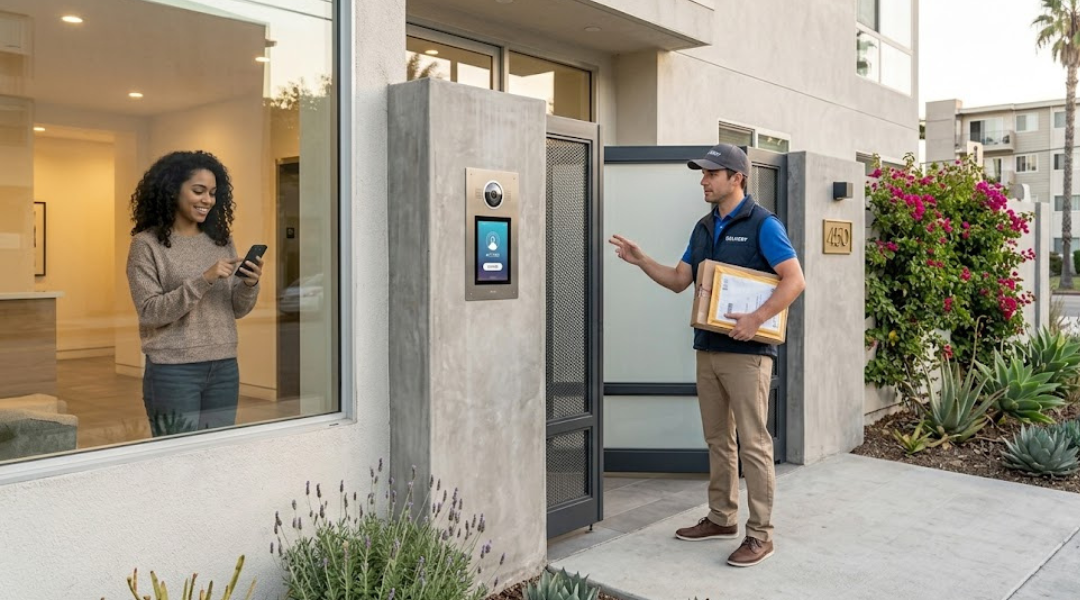
Delivery drivers, gig workers, and guests benefit from temporary access codes or one-time QR passes. These prevent unauthorized reuse while keeping the process simple. Systems that log visitor entries help you verify who entered and when without installing expensive guard systems.
For postal deliveries, a small access-controlled mailroom or secure package locker reduces missed deliveries. Where space is tight, consider integrating gate and door systems with delivery partner apps that support secure digital key exchanges. This aligns with LA’s high demand for contactless convenience.
When Centralized Versus Distributed Entry Points Apply
You need to balance ease of access with cost and safety. In a centralized entry design, one main gate or door controls all access. This setup fits buildings with shared hallways or a single lobby because it simplifies visitor management and reduces hardware needs.
In contrast, distributed entry points—such as separate gates or stairwell doors—work better when units have exterior entrances or split-level layouts. These systems use smaller keypads or readers at each door, allowing limited access to shared areas while maintaining resident privacy.
For most low-density properties, a hybrid model offers the best efficiency. Use one main access system for common entries and lighter solutions like PIN or Bluetooth locks at individual units. This keeps security layered while staying practical for your building size.
Gate Operator and Entry System Configurations
Choosing the right gate operator and access system depends on your property’s layout, resident traffic, and the level of security you need. Reliable equipment, proper configuration, and integrated controls help you manage vehicle and pedestrian entry safely in a compact apartment community.
Swing and Slide Gate Suitability by Lot Layout
The space around your driveway decides whether a swing or slide gate works best. Swing gates need room to open inward or outward, so they fit properties with flat driveways and enough setback to clear parked cars or walkways. Slide gates move along a track and save space, making them better for narrow or sloped lots common in Los Angeles.
Swing gate operators often use linear actuators for smaller gates or articulated arms for heavier ones. These are durable choices for residential settings. Slide gate operators handle higher traffic and heavier gates with fewer moving parts exposed to damage, which suits small multifamily complexes near busy streets.
When selecting the motor, check that it’s rated for your gate’s weight and use frequency. Properties with frequent resident turnover or delivery traffic should use a commercial-duty operator or one with cellular backup so the system keeps running during power or network outages.
Keypad, Intercom, and Mobile-Based Access Systems
Small apartment buildings benefit from a mix of physical and digital access points. Keypads with unique PINs make access easy for residents and service staff, while telephone or video intercoms help verify visitors before granting entry. Units from brands such as DoorKing or LiftMaster combine voice and camera functions, giving you remote management through a smartphone.
Mobile-based systems using Bluetooth or cloud access apps let residents open gates from anywhere. This setup reduces lost key fobs and supports automatic scheduling for deliveries or guests. Adding smart locks to pedestrian doors can connect your building’s entry system to the same app, simplifying how you manage multiple entry points.
A comparative look:
| Access Type | Remote Capability | Typical Use |
|---|---|---|
| Keypad | Limited | Basic resident access |
| Intercom (audio/video) | Moderate | Visitor management |
| Mobile App | High | Flexible, cloud-based control |
Integration Between Pedestrian and Vehicular Entry Points
Coordinating pedestrian and vehicle access ensures smooth movement and better control. Gate operators and door controllers should connect through a unified access control platform. This lets you monitor all entry points with one database of users and credentials.
Integrated systems prevent duplicate management tasks and help track who enters, when, and how. You can assign one mobile credential or key fob to unlock both a front gate and a side door. That consistency improves convenience without sacrificing security.
Use smart locks on walk-through gates or lobby doors so residents have a single method of entry. Combine these with your gate controller through Wi-Fi or wired integration. If a network outage occurs, cellular backup modules keep access logs updated and maintain remote entry functions until full service returns.
Evaluating Control, Cost, and Maintenance Tradeoffs
Balancing security, ease of upkeep, and fair cost-sharing can determine whether a gate and access control setup works well for a small apartment building. You need a system that protects residents without adding unnecessary expense or technical complexity while staying reliable year after year.
Hardware Simplicity Versus Feature-Rich Access Systems
Simple systems, like keypad entry or key fobs, are affordable and easy to manage. They work well for up to 20 units and require minimal technical upkeep. However, these setups can make it harder to track who enters, since shared codes or misplaced fobs reduce accountability.
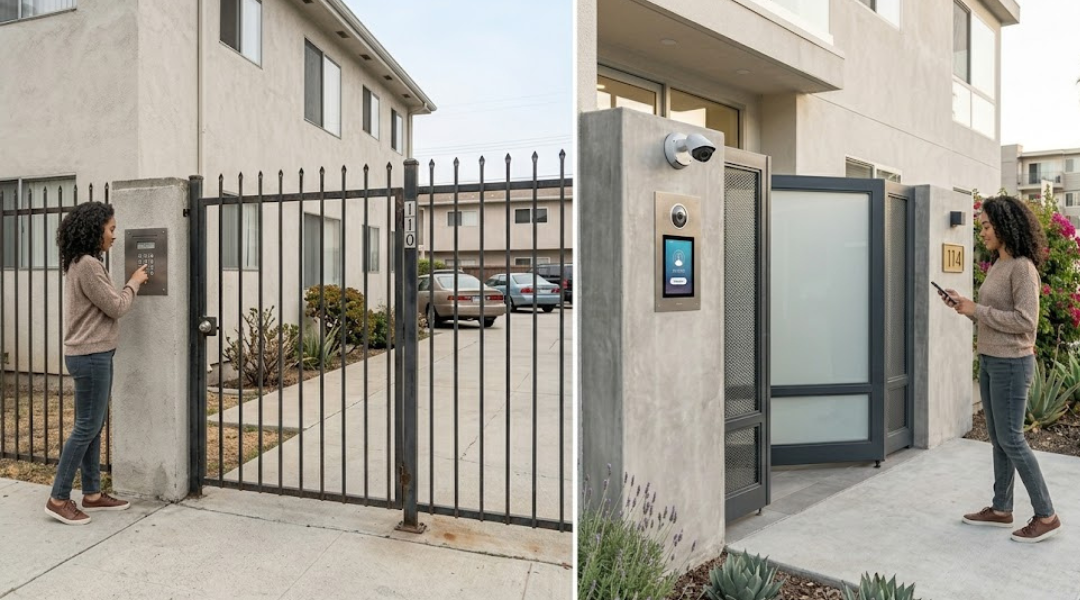
Feature-rich systems pair gates with video verification, motion sensors, or 24/7 video recording. These include smart intercoms or mobile-based access that logs every entry event. You gain better oversight and audit trails, but installation may involve extra wiring, network bandwidth, and higher upfront hardware fees.
When choosing between simplicity and features, consider the service coverage and risk level of your property. A small LA apartment near busy streets might need security cameras and intruder intervention alerts, whereas a quiet complex could rely on PIN access combined with remote video calling.
Long-Term Maintenance Demands Across System Types
Maintenance needs vary by the type of access system. Wired systems with fixed security cameras and hardwired gates require scheduled inspections and occasional cable repairs. These setups are reliable but may need professional servicing over time.
Cloud-based or mobile-controlled systems rely on software updates and internet connectivity. They simplify troubleshooting but need consistent network access and occasional firmware checks.
Preventive tasks—such as cleaning camera lenses, testing glass break sensors, or checking motion detection zones—extend the system’s life span. Properties that include professional monitoring or third-party support can reduce on-site workload but will have subscription costs.
You should plan for biannual safety checks and keep spare credentials handy. Small, routine updates often prevent expensive emergency repairs later.
Cost Distribution Across Tenants, Owners, and Upgrades
Spending on gate access control in smaller buildings often breaks down into initial equipment, recurring maintenance, and shared upgrades. Owners usually pay for installation and base hardware, such as gate operators and intercoms. Tenants may share service or software costs that run monthly or annually.
| Cost Type | Typical Responsibility | Example Cost Range |
|---|---|---|
| Hardware | Owner/HOA | $3,000–$10,000 |
| Software/Monitoring | Shared or Owner | $20–$60 per month |
| Maintenance | Owner | $200–$600 yearly |
Evaluating these tradeoffs helps you maintain safety without straining budgets. Planning ahead for upgrades—like adding new video verification tools or network cameras—keeps the system scalable as security needs evolve.
Regulatory and Environmental Constraints in Los Angeles
Installing automated gates and access control systems in Los Angeles requires you to follow strict safety and zoning rules. You must balance security with emergency access, meet spacing limits on small lots, and reduce the impact of noise and vehicle movement.
Fire Department Access and Emergency Override Requirements
The Los Angeles Fire Department (LAFD) enforces gate access rules to ensure that first responders can enter a property quickly during an emergency. Electric and motorized gates must include a manual release or approved override switch, often tied into the city’s standardized Knox key system. Some access panels must also support radio-controlled entry compatible with LAFD systems.
If you manage a smaller apartment complex, verify gate automation controls meet UL 325 safety standards. These devices prevent injury and reduce false triggers from power surges or sensor errors. Smoke alarms, sprinkler systems, and access gates must work together seamlessly, allowing emergency response even when power fails. Include clear signage on gates showing access points and override instructions.
Regular testing helps confirm all override and detection devices operate correctly. Maintenance logs should document manual release function checks, alignment of safety edges, and quick reset of the control panel after test activation.
Space Limitations in Dense Urban Lot Configurations
Lots under 50 feet wide, common in older Los Angeles neighborhoods, restrict gate design choices. Sliding gates typically need 10–12 feet of lateral clearance, while swing gates require enough setback to avoid blocking sidewalks or public rights-of-way. When this clearance isn’t possible, you may need to use bi-fold or vertical lift models designed for narrow entries.
City building rules and LADBS permit guidelines determine gate height, required setbacks, and visibility at driveways. Pedestrian safety rules may also influence how close an access control keypad can be installed to a street or alleyway. In shared driveways, coordinate with neighboring owners so vehicles don’t obstruct sensors or cause gate misalignment.
Before construction, measure turning radii for service vehicles and confirm enough space exists for emergency access. Document site constraints in your plans to speed up permit review.
Noise, Traffic Flow, and Neighborhood Compliance Factors
Motorized gates and intercoms affect surrounding residents if improperly specified. Each installation must meet Los Angeles Municipal Code noise limits, especially during nighttime hours. Hydraulic and brushless DC gate operators often perform more quietly and reduce maintenance compared to chain-driven systems.
Traffic flow compliance matters when vehicles queue at the gate. Stacking space between the street and gate should prevent cars from blocking travel lanes or pedestrian crossings. If your building faces a busy arterial street, an exit loop or automatic close timer can help maintain smoother traffic movement.
You should also keep your intercom and alarm systems calibrated to prevent false alarms. Faulty sensors can trigger unnecessary responses and may result in city fines. Consider devices that log access events digitally so you can verify legitimate entries when investigating nuisance alarms.
For eco-conscious projects, use low-power gate operators and LED indicators to reduce energy use without compromising system reliability.
Hardware Compatibility Trends in Regional Supply Networks
In Los Angeles, small apartment buildings rely on gate hardware that balances cost, reliability, and compatibility with existing systems. Local supply chains now emphasize flexible components that work across multiple brands and support future upgrades. Installers often match operators, controllers, and credential devices from different suppliers to reduce maintenance costs and prevent full system replacement.
Equipment Patterns Observed by Automated Gate Supply
Regional suppliers report steady demand for compact swing and sliding gate operators rated for light commercial duty. You often see mid-range models from LiftMaster, Viking, and Doorking paired with cloud-enabled access controllers. These brands dominate because distributors can source replacement boards, limit switches, and receivers quickly within Los Angeles County.
Smart hardware capable of remote diagnostics and firmware updates has become standard, even in small installations. Gate supply warehouses also stock modular control panels that let you add RFID readers or Bluetooth modules without changing the base unit. This flexibility helps you adapt to evolving tenant preferences for app-based entry.
| Hardware Type | Common Voltage | Integration Feature |
|---|---|---|
| Swing Operator | 120/240V AC | Add-on Wi-Fi module |
| Slide Operator | 24V DC | Built-in loop detector |
| Barrier Arm | 24V DC | Optional access board slot |
These equipment patterns reflect a broader trend: keeping core mechanical systems simple while making the logic boards increasingly software-driven.
Cross-Brand Interoperability Between Operators and Access Controls
You can now link a gate operator from one maker to an access control panel from another without major rewiring. Many products use open-standard relay protocols or RS-485 communication buses, allowing mixed-brand setups to function properly. Installers in Los Angeles often combine a LiftMaster operator with a Linear or LenelS2 controller to align with available parts or service agreements.
Mobile credential systems use NFC or Bluetooth, so compatibility depends more on firmware than on mechanical interfaces. Updating controller software usually resolves mismatched brand issues. However, you still need to confirm relay voltage and polarity between units to avoid short circuits. Keeping a consistent low-voltage wiring scheme across devices simplifies troubleshooting later.
This interoperability gives small buildings the option to scale technology over time instead of replacing entire systems at once.
Retrofit Considerations for Aging Apartment Gate Systems
Older properties in LA often operate 15- to 25-year-old gate systems using wired keypads or clicker remotes. When you retrofit, your goal is to preserve functional motors while upgrading electronics for mobile access, cloud control, or logging capability. Adapters now let older operators accept new card readers and digital keypads through low-voltage converters.
Before upgrading, verify amp draw, control voltage, and limit switch design. Some older units run on 230-volt single phase and may require step-down transformers for new smart boards. Local suppliers usually stock retrofit kits with universal receiver boards and wireless link modules.
Replacing only the access controller while keeping the original gate hardware often costs less than half of a full rebuild. This approach lets you modernize convenience features while maintaining structural reliability and compliance with city safety codes.