
The gates that guard Beverly Hills and Holmby Hills estates do far more than mark a property line. They shape the first impression, frame the architecture, and form the foundation of each property’s security system. The most popular gate styles in these neighborhoods combine refined design with advanced technology to deliver privacy, elegance, and protection that match the standards of Los Angeles’ most exclusive streets.
You see this balance everywhere—from sleek modern gates that complement mid-century homes in Trousdale Estates to classic wrought iron designs fronting traditional estates in Holmby Hills. These gates often integrate quiet underground operators, smart access control, and discreet camera systems that strengthen safety without compromising the aesthetic. Each installation reflects both the homeowner’s taste and the city’s strict design and height guidelines.
As you explore how design and technology intersect, you will learn why thoughtful integration, compliance, and equipment compatibility matter. Gate professionals like Automated Gate Supply in North Hollywood help connect architectural goals with dependable automation and security solutions designed for high-value properties like yours.
Prominent Architectural Gate Designs
Gates in Beverly Hills and Holmby Hills often mirror the area’s architectural diversity, ranging from Spanish Colonial estates to modern hillside villas. Material choices, visual transparency, and scale all shape how these gates define property boundaries while blending with estate architecture.
Wrought Iron, Steel, and Composite Material Preferences
You often see wrought iron and steel used for their strength, detailed craftsmanship, and long lifespan. Wrought iron offers ornate scrollwork and traditional appeal, common in neighborhoods such as Bel Air, where timeless design fits classical architecture. Steel provides cleaner lines and lower maintenance, making it a favorite for newer, minimalist properties.
Composite materials are growing in popularity. Aluminum composites and powder-coated steel panels mimic the look of solid metal yet reduce weight and corrosion. This balance suits the sea air conditions of Malibu Colony, where durability matters as much as appearance.
A simple comparison helps show their key traits:
| Material Type | Strength | Maintenance | Design Style Fit |
|---|---|---|---|
| Wrought Iron | High | Moderate | Traditional / Ornate |
| Steel | Very High | Low | Contemporary / Transitional |
| Composite | Moderate | Very Low | Modern / Coastal |
Each material performs differently, but the best choice depends on how you want to balance aesthetics, cost, and environmental factors.
Visual Openness Versus Privacy-Driven Solid Panel Designs
Gate design often depends on how much visibility you want. Open designs, featuring spaced iron bars or mesh inserts, maintain sightlines and let landscapes remain visible from the street. They also signal openness, which suits homes with large setbacks or manicured front lawns.
In contrast, solid-panel gates use materials like wood-clad steel or aluminum sheets. These block both sound and view, giving privacy to estates near busy streets or public walkways. Owners in Holmby Hills often choose these options to maintain a sense of quiet and seclusion.
Hybrid designs combine partial transparency with decorative inserts. You can place perforated metal, vertical louvers, or tinted glass panels strategically to achieve privacy without losing style or ventilation.
Influence of Estate Scale on Gate Proportions and Layout
The size and shape of a property directly affect gate proportions. Large estates use double-swing or sliding gates that accommodate long driveways and multiple vehicle lanes. Smaller lots, especially near hillside roads, rely on compact sliding systems to save space and comply with local roadway clearance rules.
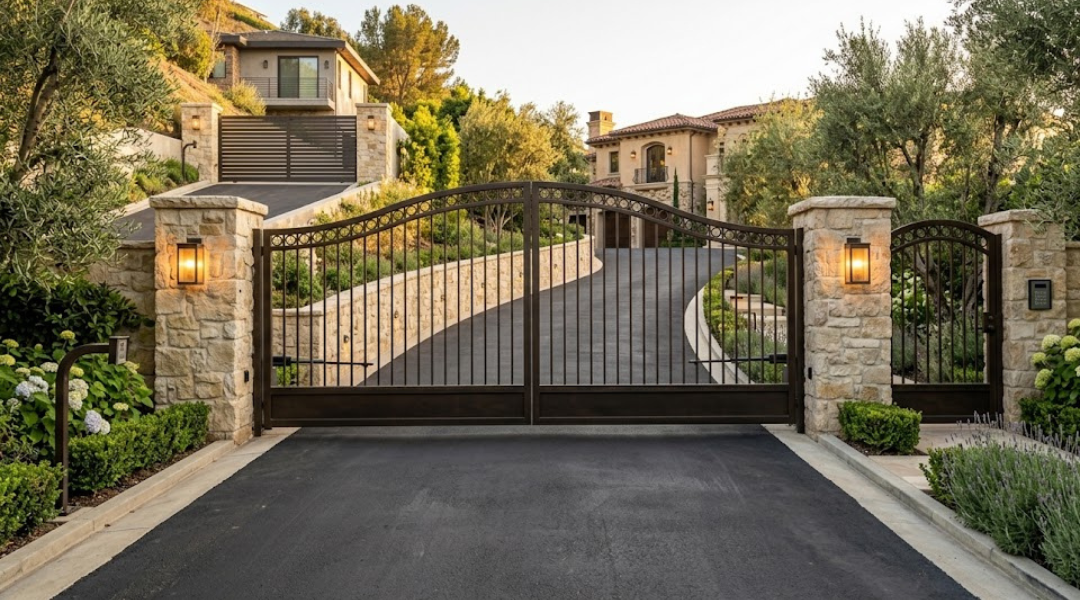
Proportion plays as much a role as any other visual feature. A tall gate may match a grand façade, while wide but lower gates create a balanced profile for sprawling ranch-style homes. Decorative posts, integrated lighting, and pedestrian side gates help tie the layout to the property’s entry sequence.
In high-value areas like Beverly Hills or Bel Air, symmetry and scale reinforce the architecture’s identity. Thoughtful gate placement ensures functionality while framing the property as securely and elegantly as its design demands.
Enhancing Security Through Integrated Approaches
A secure gate system combines layered technologies that work together to reduce vulnerabilities. By coordinating surveillance, access control, and physical design, you can maintain discreet protection while preserving the visual appeal expected in estates across Beverly Hills and Holmby Hills.
Integration of Surveillance, Access Control, and Automation
Combining surveillance systems with automated gate operations builds a responsive network that detects and manages potential threats. In gated communities throughout Los Angeles, these elements often connect through a centralized control platform that monitors cameras, motion detectors, and access points.
When configured correctly, you can view live video, review access logs, and receive alerts directly on a smartphone. An integrated interface helps you manage entry approvals, track activity, and adjust settings remotely.
| Component | Function | Benefit |
|---|---|---|
| Cameras | Capture visual data | Verifies identity and activity |
| Access Control | Manages authentication | Ensures only authorized entry |
| Automation | Coordinates operations | Reduces manual involvement |
Homes in Mulholland Estates often rely on biometric scanners, RFID systems, and license plate recognition to streamline secure access for residents and service personnel. Automated coordination limits human error and improves consistency in system response.
Role of Monitored Entry Points and Remote Verification
Monitoring entry points allows you to confirm who enters or exits without direct contact. A controlled access gate with intercom, camera feed, and verification software makes it possible to identify deliveries, guests, or employees before granting access.
In high-value neighborhoods, you can link your entrance system to professional monitoring services. Operators verify credentials and respond to alerts immediately, reducing potential delays in emergency situations.
Systems that support remote verification connect through smart devices, offering you flexibility when traveling or away from the property. You can receive real-time notifications, view live footage, and unlock gates temporarily for trusted visitors. These measures combine convenience and accountability while maintaining strict perimeter control.
Physical Deterrence Versus Discreet Security Implementations
Effective gate design in Beverly Hills must balance visible deterrence with aesthetic appeal. A bold appearance—such as reinforced materials, controlled lighting, and clear boundaries—signals security readiness and discourages trespassers.
Discreet systems use hidden sensors, quiet automation, and integrated design elements to maintain privacy. This approach suits properties valuing architectural harmony and neighborhood standards without sacrificing protection.
In many estates, designers use materials like wrought iron with concealed camera housings or embedded motion sensors in landscape features. Whether you prefer visible strength or subtle reinforcement, combining physical deterrents with monitored technology ensures both style and safety remain intact.
Balancing Privacy, Visual Appeal, and Security
Designing a gate system in Beverly Hills and Holmby Hills involves finding equilibrium between discretion, aesthetics, and protection. You must consider how structure, layout, and technology interact so that privacy does not compromise situational awareness or architectural cohesion.
Visibility Limitations and Their Effect on Surveillance Coverage
When you increase privacy with tall or solid gates, you reduce what security cameras and guards can see. Limited sightlines create potential blind spots that intruders might exploit. To reduce this risk, many estates integrate layered surveillance, including perimeter sensors, angled cameras, and motion-triggered lighting that adapts to obstacles.
In neighborhoods like Holmby Hills, trees and dense landscaping often compound visibility issues. Strategic trimming and the placement of low-profile cameras along gate posts can maintain security without disturbing visual harmony.
Use a mixed approach that includes both privacy screening and visible deterrents. The table below compares two configurations:
| Gate Type | Privacy Level | Surveillance Integration | Typical Use |
|---|---|---|---|
| Solid aluminum or wood gate | High | Requires integrated cameras or sensors | Front entrances facing public roads |
| Patterned iron gate | Moderate | Allows direct camera visibility | Inner motor court or secondary entrance |
By understanding these trade-offs, you can balance privacy with functional vigilance.
Balancing Architectural Continuity With Defensive Design
Your gate should reflect the home’s architectural tone while reinforcing perimeter defense. In areas with distinct architectural styles, such as Holmby Hills estates, this often means replicating the main residence’s materials and finishes in the gate design.
Using modern automation systems—hidden hinges, quiet motors, and coded entry panels—you can maintain seamless aesthetics without drawing attention to the security function. Many homeowners also match gate color and texture to stone walls or fencing for cohesion.
Architectural continuity does not preclude performance. Reinforced metal cores inside decorative facades and integration of smart intercoms let you maintain elegance while preventing breach. The key is subtlety: design elements that act as security measures without looking overtly defensive.
Implications of High-Profile Occupancy on Gate Selection
Properties linked to public figures in Beverly Hills and Holmby Hills face heightened security challenges. You must protect against intrusion, paparazzi, and unauthorized deliveries while preserving a calm, non-fortified appearance.
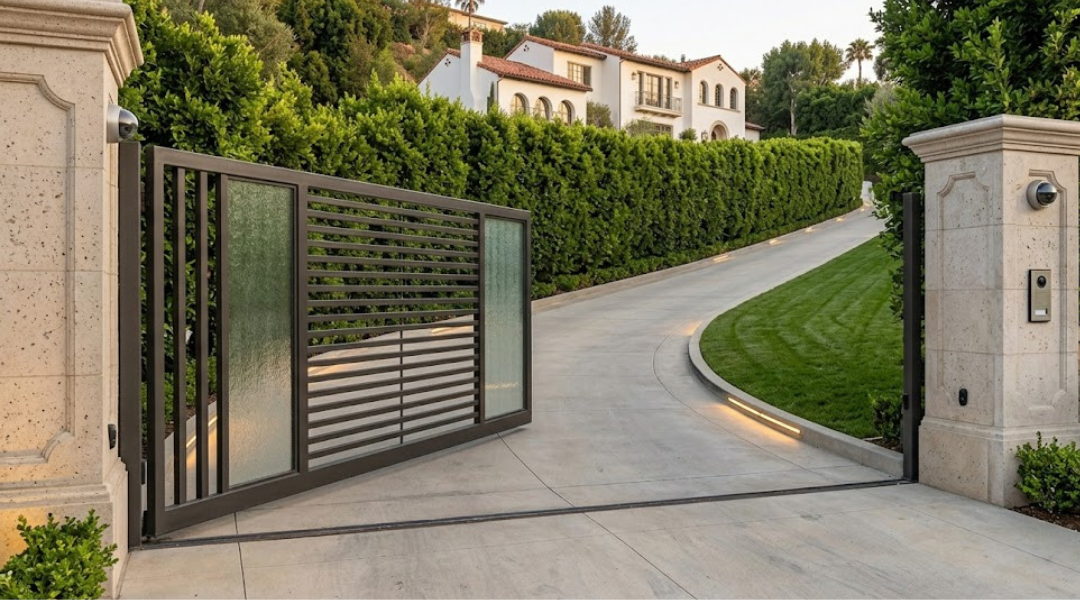
High-profile estates typically favor motorized sliding gates with biometric or encrypted access controls. These systems reduce human exposure and restrict unauthorized entry. Privacy glass panels or metal screens obscure direct views yet still allow airflow and architectural balance.
Coordination with local law enforcement and private security firms is common for active monitoring. Emergency override features provide quick exit capabilities during power loss or lockdown. For you, the ideal setup merges responsive control, limited visibility, and architectural discretion—a practical standard in both Holmby Hills and surrounding luxury enclaves.
Complying With Los Angeles Estate Restrictions
Estate gates in areas like Beverly Hills, Holmby Hills, and Brentwood Circle must meet strict local standards for safety, design, and access. You need to understand how city codes shape gate height and position, how property layout impacts gate equipment, and how emergency access rules influence final approval.
Local Zoning Influences on Gate Height and Placement
Los Angeles zoning ordinances set maximum gate heights and setbacks to preserve neighborhood character and ensure visibility from streets. In Beverly Hills and Holmby Hills, front gates typically cannot exceed 6 feet without a special permit. Corner properties may face tighter limits to prevent sightline blockage.
Gates must sit at least several feet inside the property line so vehicles don’t block sidewalks while waiting for entry. Entry pillars, lighting, and intercom posts also count toward structural limits. If your estate falls within a Historic Preservation Overlay Zone, the city may review the design for materials consistency and aesthetic compatibility.
In Brentwood Circle and some gated enclaves, HOA design boards add extra approval layers. Their standards can dictate finishes, automation types, and even landscaping around the gate. Always confirm your design with both the homeowner association and city planning before construction begins.
Terrain, Driveway Length, and Gate Operator Considerations
The slope and layout of your property determine how a gate opens and what type of operator it requires. In hillside areas like Holmby Hills, sliding gates often perform better than swinging ones because they handle uneven terrain more smoothly.
Long driveways—common on estates above Sunset Boulevard—may require dual gate operators or hydraulic systems for reliable performance. You should plan for 24-inch minimum clearance between moving parts and property walls to meet safety regulations.
Power sources also affect compliance. The city may require low-voltage wiring or battery backup to keep gates operable during outages. If your driveway crosses a natural slope, you might need a drainage plan to prevent water runoff from affecting motors and sensors. These technical details determine not only code compliance but long-term reliability.
Fire Safety Access Requirements in Hillside Properties
Los Angeles Fire Department (LAFD) codes enforce strict access standards for hillside estates, where narrow roads and long drives can slow response times. Your gate must allow first responders immediate entry.
Most high-end estates install fire department key boxes (Knox systems) linked to local responders. Electric gates need a manual release lever or approved override keypad on the exterior side within reach of emergency staff. The LAFD also mandates a minimum 20-foot gate opening for fire apparatus in designated hillside zones.
If your home sits beyond a steep grade, you may need to demonstrate that fire vehicles can turn and clear the gate area safely. Regular maintenance—testing call boxes, verifying override access, and keeping approach zones clear—is part of remaining in good standing with city safety inspections.
System Compatibility Across Regional Suppliers
High-end neighborhoods such as Beverly Hills, Holmby Hills, and Bel Air Crest often rely on complex gate systems that blend automation, security, and style. You must ensure that each gate operator, access system, and decorative element functions seamlessly together to avoid installation delays or maintenance issues later. Material consistency, voltage standards, and integration with existing smart-home infrastructure are critical points to review before final selection.
Product and Hardware Patterns Noted by Automated Gate Supply
Suppliers serving affluent Los Angeles neighborhoods often favor brands that support both automation and architectural flexibility. Automated Gate Supply, a common distributor in Southern California, typically aligns with manufacturers like LiftMaster, Viking Access, and DoorKing, which are known for their UL 325-compliant control modules and multi-voltage adaptability.
These patterns show up most often in swing, slide, and bi-folding gate systems designed for hillside driveways. You’ll find residential installations in Holmby Hills often using stainless or powder-coated steel to resist corrosion under irrigation runoff. The interchangeable brackets and modular wiring connectors make routine sensor upgrades easier.
Below is a quick comparison of hardware features often standardized across suppliers:
| Component Type | Common Specification | Integration Benefit |
|---|---|---|
| Gate Operator Board | 24VDC dual-relay | Works with Wi-Fi controllers |
| Loop Detector | 10–40 kHz adaptive sensing | Reduces false openings |
| Keypad/Reader Module | Wiegand or TCP/IP | Allows mixed access control protocols |
Compatibility Considerations Across Premium Operator Brands
When working with multiple operator brands, you must confirm signal logic, mounting orientation, and voltage compatibility. In Beverly Hills estates, property managers often connect LiftMaster myQ systems with ButterflyMX or Kisi for remote access. This requires synchronized firmware and matching interface relays to prevent response lag.
Regional suppliers often preconfigure boards to NEMA 4 or 4X standards due to dust and irrigation exposure. You should verify if proprietary cloud services can communicate through Onvif or REST API standards before final installation. Otherwise, integrating video intercoms or biometric scanners later can become costly.
Large gated communities, including Bel Air Crest, may use centralized network switches linking multiple entrance nodes. This configuration streamlines maintenance but depends on uniform board firmware across all installed units.
Differences Between Custom Fabrication and Standardized Components
Custom-fabricated gates provide unique design control, but variations in hinge spacing, frame thickness, or actuator arm length can limit hardware interchangeability. In Holmby Hills and Beverly Hills, many estates commission architectural metalwork that requires custom brackets or offset arm mounts. You’ll often need precise CAD drawings to match operator geometry.
Standardized gate systems, conversely, rely on factory-drilled mount points and plug‑and‑play wiring, enabling easier maintenance and faster replacement cycles. They work well when you prioritize reliability over bespoke design.
You should assess early whether the gate’s fabrication shop coordinates directly with automation suppliers. Consistent alignment between fabrication tolerances and hardware standards reduces retrofitting costs and ensures that smart locks, magnetic sensors, and camera housings integrate without modification.