
Managing gated communities or multi-unit properties comes with serious safety and liability responsibilities. Automated gates add convenience and security, but they also fall under strict national safety rules that every property manager and HOA must follow. UL 325 and ASTM F2200 are the two key standards that define how automated gates must be built, installed, and maintained to protect people and property.
You need to know when these standards apply to your property and how they affect your gate systems. Understanding the purpose behind UL 325 and ASTM F2200 helps you evaluate your compliance risks, avoid costly violations, and keep residents safe. These standards outline how gates should respond when obstacles are detected, where sensors must be placed, and how structural safety requirements prevent entrapment hazards.
At Automated Gate Supply in North Hollywood, you gain practical guidance and reliable equipment to meet these safety benchmarks. With over two decades of experience serving Los Angeles and surrounding areas, the company provides the knowledge, hardware, and support you need to maintain compliant automated gate systems across your properties.
When UL 325 and ASTM F2200 Apply to Managed Properties and HOAs
You must follow UL 325 and ASTM F2200 standards whenever automatic vehicular gates serve residents, guests, or service vehicles. These rules help reduce liability and improve safety by controlling gate operation and physical design. Both standards together ensure that motorized gates are installed, maintained, and used in ways that prevent entrapment or impact hazards.
Common Residential, Multi-Family, and Shared-Access Scenarios
If your property has gated entries, shared parking areas, or private driveways, UL 325 and ASTM F2200 apply. A single-family home with a powered driveway gate or a condominium with a shared automatic gate must use properly listed gate operators and compliant safety devices. These include photoelectric sensors, contact edges, or constant-pressure controls designed to stop and reverse the gate when movement poses a hazard.
Multi-family and HOA-managed properties often fall under UL 325 Class II – Commercial/General Access systems. This class covers gates used by residents, delivery vehicles, and visitors. As the property manager, you are responsible for verifying that installers follow manufacturer instructions and that gates include at least two independent entrapment protection methods. Routine inspections and proper maintenance records help ensure continued compliance.
Situations Involving Automated Vehicular Gate Systems
UL 325 governs the operation and control system of a powered gate, while ASTM F2200 focuses on the physical construction. When your community installs or upgrades a swinging, sliding, or vertical lift gate, both standards apply at the design and installation stages.
ASTM F2200 requires features like guarding of pinch points, smooth bottom edges, and openings smaller than 2¼ inches to prevent access to moving parts. UL 325 requires automatic reversal, entrapment alarms, and clear signage around motorized gates. Together, they create a system that protects drivers, pedestrians, and property while reducing your risk as a manager or HOA board.
What This Explanation Covers and Where Its Boundaries Are
This guide focuses on how UL 325 and ASTM F2200 apply to automated gates, outlining their purpose, scope, and relevance to your property management responsibilities. It distinguishes between safety standards and enforceable building codes while clarifying that compliance guidance differs from installation or product recommendations.
Safety Standards Versus Building Codes and Local Enforcement
UL 325 and ASTM F2200 outline safety requirements for automated gate systems. They set performance and design expectations to reduce hazards such as entrapment and mechanical failure. These standards describe how equipment should behave safely, not how or where gates must be installed.
Building codes, often adopted or adapted by cities and counties, serve a different legal role. Codes are enforced locally, while safety standards such as UL 325 are referenced by those codes but not automatically enforceable on their own. Local inspectors or the International Code Council (ICC) may reference these standards to determine compliance during plan reviews.
For your property or homeowners association (HOA), understanding this separation helps you know who holds authority. A product meeting UL 325 may still fail a local inspection if installation violates municipal code. Similarly, a gate installed per local code but lacking UL 325 compliance can create liability exposure. The key is coordinating both requirements before installation or modification.
Operational Intent Rather Than Product Selection or Installation Advice
This explanation focuses on how UL 325 and ASTM F2200 define operational intent, meaning how gate systems should function safely across different use types—residential, commercial, or industrial. You learn what the standards expect from sensors, control systems, and gate movement without being told which product or manufacturer to choose.
Manufacturers design equipment to meet these performance tests, but enforcement and compatibility depend on your specific site conditions. You remain responsible for verifying that any gate operator or access control setup meets both system safety intent and local requirements.
This article does not substitute for a certified installer or engineer’s assessment. Instead, it provides context so you can communicate effectively with contractors and code officials. Understanding the standards’ intent lets you make informed maintenance and policy decisions without crossing into technical design or selection work.
How UL 325 and ASTM F2200 Work and Why They Exist
These standards exist to reduce the risk of serious injury or property damage from automated gate systems. They guide how you design, install, and maintain gates so the equipment works reliably and meets safety expectations set by recognized testing organizations.
Safety Risks Associated With Automated Gates
Automated gates move heavy panels and use motors with strong force. Without proper safety features, a gate can crush, shear, or trap a person or animal. Many injuries happen when gates lack sensors or mechanical stops, or when users bypass built-in protections for convenience. Understanding how these risks occur helps you recognize why modern systems must meet certified standards before use.
Common hazards include:
- Entrapment: Gaps that pull in clothing or limbs.
- Impact: Motor-driven arms striking vehicles or people.
- Mechanical failure: Poor wiring or weak mount points causing sudden movement.
Environmental exposure also increases risks. Weather and corrosion can weaken the structure if the gate materials are not properly rated for outdoor use. Standards such as UL 94 for flammability and fire endurance tests ensure materials can withstand temperature changes, electrical load, and fire conditions without major failure.
The Roles Each Standard Plays in Injury Prevention and System Design
UL 325, issued by Underwriters Laboratories, sets requirements for the electrical and mechanical operation of gate openers. It defines how activation controls, reversing systems, and sensors must respond when an obstruction appears. Compliance helps ensure that the motor stops or reverses direction to prevent harm. UL performs continuous testing to confirm that designs stay within safe electrical limits.
ASTM F2200 focuses on the physical gate system—its structure, gaps, and entrapment zones. It tells you how to design panels, mesh, and rollers so the moving parts cannot catch or pinch users. The standard also describes proper spacing from walls and posts, reducing crush points.
When both standards are applied together, your gate operates safely as a complete system. UL 325 safeguards the powered components, while ASTM F2200 governs the design and layout. Following both gives you a balanced approach to safety, functionality, and long-term reliability.
How to Evaluate Compliance Responsibility and Risk Exposure
You must understand who holds legal and practical responsibility for automated gate systems and how to manage the documentation and maintenance that prove compliance. Clear lines of accountability help reduce liability and improve safety for residents, visitors, and contractors.
Owner, Operator, and Manager Accountability
As a property manager or HOA representative, you share compliance duties with the property owner and anyone operating the gate. UL 325 and ASTM F2200 place direct responsibility on these roles to ensure gates meet safety and performance standards. If someone is injured or property is damaged, regulators and insurers will look at who maintained, inspected, and authorized the system’s operation.
Document agreements that specify who controls maintenance budgets and who approves repairs. These contracts help prevent disputes when accidents occur. You should also verify that installers and service providers carry proper licensing and liability coverage.
| Role | Primary Responsibility |
|---|---|
| Property Owner | Legal compliance and funding repairs |
| HOA/Manager | Daily oversight and vendor coordination |
| Installer/Technician | System installation, safety testing, and documentation |
Keeping these roles clearly documented helps demonstrate due diligence in case of audits or claims.
Inspection, Documentation, and Ongoing Maintenance Considerations
Regular inspections confirm that your automated gates continue to meet UL 325 electrical safety and ASTM F2200 structural standards. Create a maintenance log that records testing intervals, technician names, and any corrective actions.
You should schedule professional inspections at least annually or after major repairs. Test safety devices such as reversing sensors, photo eyes, and warning signs to ensure they perform as intended.
Store all inspection reports, service invoices, and manufacturer manuals in an accessible file. This record proves compliance during safety reviews and supports warranty claims. Consistent documentation also shows that you’ve managed risk prudently, reducing exposure to injury-related liability.
How These Standards Shape Gate Design, Operation, and Outcomes
These requirements directly affect how automatic gates are built, installed, and maintained to limit hazardous movement and reduce accidental injury. They define physical construction rules and specific safety systems that you must include for compliance and liability protection.
Required Safety Devices, Monitoring, and Control Logic
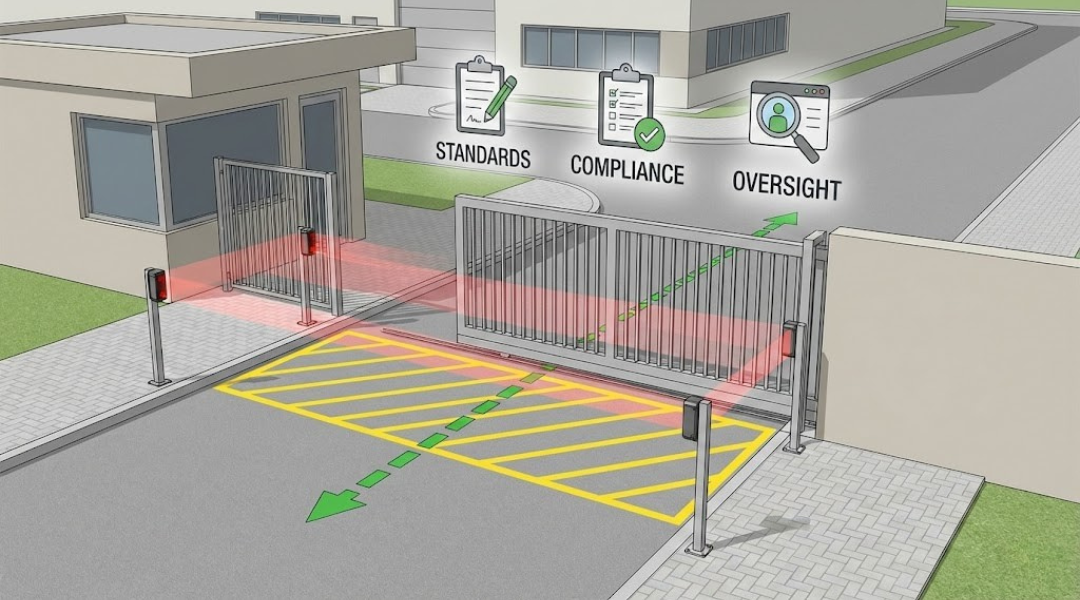
UL 325 sets the safety expectations for gate operators—the motors and control systems that move gates. ASTM F2200 governs the gate panels and physical structure. Together, they ensure both the equipment and the gate body prevent entrapment and operate safely.
You must install at least two independent entrapment protection devices for most sliding and swinging gates. Typical options include:
| Type | Description |
|---|---|
| A | Built-in (inherent) reversing/stop function |
| B1 | Photoelectric sensor (non-contact) |
| B2 | Contact edge sensor |
| C | Pressure-limiting clutch or relief device |
| D | Manual control requiring continuous activation |
Modern systems rely on monitored safety devices. That means the operator’s control logic constantly checks that sensors are functional. If a sensor fails or wiring is damaged, the gate must stop or reverse to prevent unsafe motion.
Proper control logic also limits force, restricts movement when an obstruction is sensed, and records system errors. Using compliant devices helps you meet insurance requirements and reduces the risk of code violations.
Implications for Retrofits, Upgrades, and Legacy Systems
If your community or facility still uses older gate systems, you may face challenges bringing them into compliance. Many earlier operators lack monitored inputs or native support for two entrapment devices.
You might need to install external sensors or replace outdated control boards. Some systems can be retrofitted with compatible photoeyes or contact edges, but others require full operator replacement. Always verify compatibility with the gate’s travel pattern and enclosure design.
Upgrading these components can also reduce maintenance costs. Newer UL 325–listed operators include built-in diagnostics and communication features that make inspections easier. By updating hardware to match ASTM F2200 design rules—such as gap spacing, guard screening, and proper post placement—you improve both safety and structural reliability.
A correctly upgraded gate not only meets current standards but also provides predictable operation and better long-term performance.