
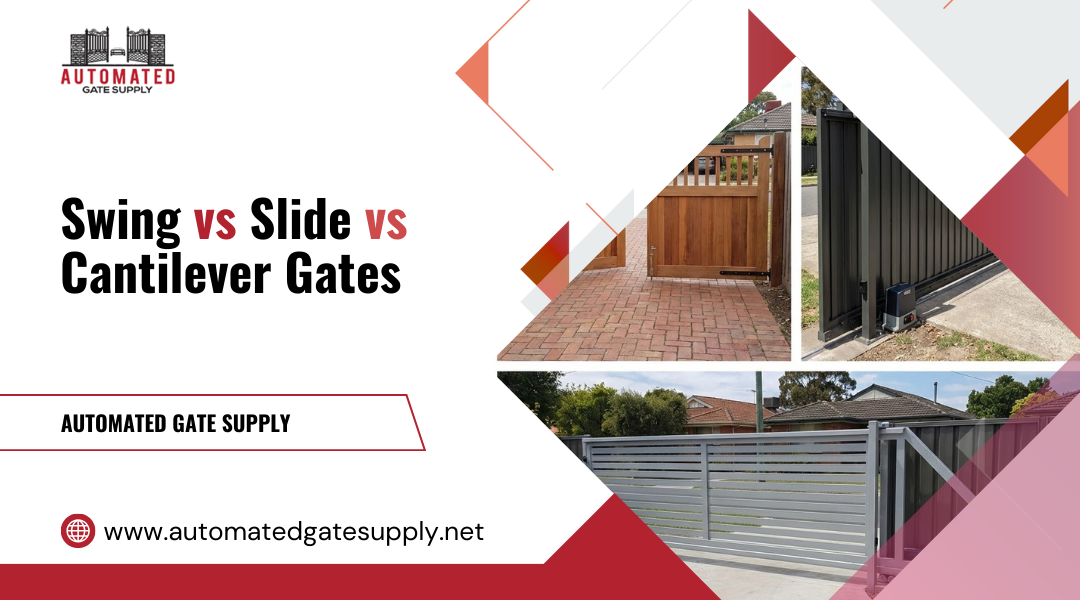
Choosing the right driveway gate for your Los Angeles property depends on more than appearance—it’s about how your layout, space, and daily use interact with the gate’s design. Whether you’re working with a narrow Hollywood Hills driveway or a wide commercial entry in Burbank, the movement style of your gate directly affects performance, convenience, and safety. For most LA properties, sliding gates fit tight spaces best, swing gates suit open, level areas, and cantilever gates perform best when the terrain or weather conditions make tracks impractical.
Understanding what drives those choices helps you avoid costly mistakes during installation and ensures smooth operation for years. Each system—swing, slide, or cantilever—follows its own logic of movement, weight support, and ground contact. These differences often decide how reliable your gate stays under Los Angeles’ heat, dust, and traffic demands.
With over two decades of experience, Automated Gate Supply in North Hollywood guides homeowners and businesses through these practical decisions every day. Their team offers the expertise and product range to match your site’s conditions with the right gate movement, operator system, and access controls so your entrance works as well as it looks.
Situations Where Gate Movement Choice Actually Shapes Outcomes
Your property layout, slope, and available space often decide whether a swing, slide, or cantilever driveway gate performs best. Each movement style interacts differently with the ground and surrounding features, which can directly affect long-term reliability and ease of use.
If your driveway slopes upward, a swing gate can drag or fail to open fully. In that setup, a sliding or cantilever system helps because it moves sideways instead of swinging into uneven ground. On flat properties with room to spare, a swing gate can look elegant and install more easily.
Weather also shapes results. In dusty or debris‑prone areas, a cantilever gate avoids ground tracks that clog or freeze. Sliding systems rely on clean, level tracks, so they demand more upkeep in similar conditions. By contrast, swing gates handle mild climates well but can strain hinges in strong winds.
| Property Factor | Best Gate Type | Reason |
|---|---|---|
| Upward slope | Slide or Cantilever | Avoids ground contact |
| Limited front space | Slide | Requires only side clearance |
| Uneven or dirty ground | Cantilever | Operates without a track |
| Level surface, decorative focus | Swing | Simpler setup and design variety |
When you match the gate’s motion style to real site conditions, you cut maintenance costs, improve access, and get smoother operation year after year.
Physical Constraints That Define What Can And Cannot Work On LA Properties
Every Los Angeles property faces limits set by its land shape, soil behavior, and shared access boundaries. These physical factors affect how a driveway gate system fits, operates, and complies with zoning rules that control distances, clearances, and supporting structures.
Parcel Depth, Frontage Width, And Setback Geometry
Gate installation depends on the size and proportions of your lot. Shallow parcels or narrow frontages limit how wide a gate can open or slide. LA zoning often requires front yard setbacks that restrict how close posts, operators, and hinges can be to the sidewalk or street.
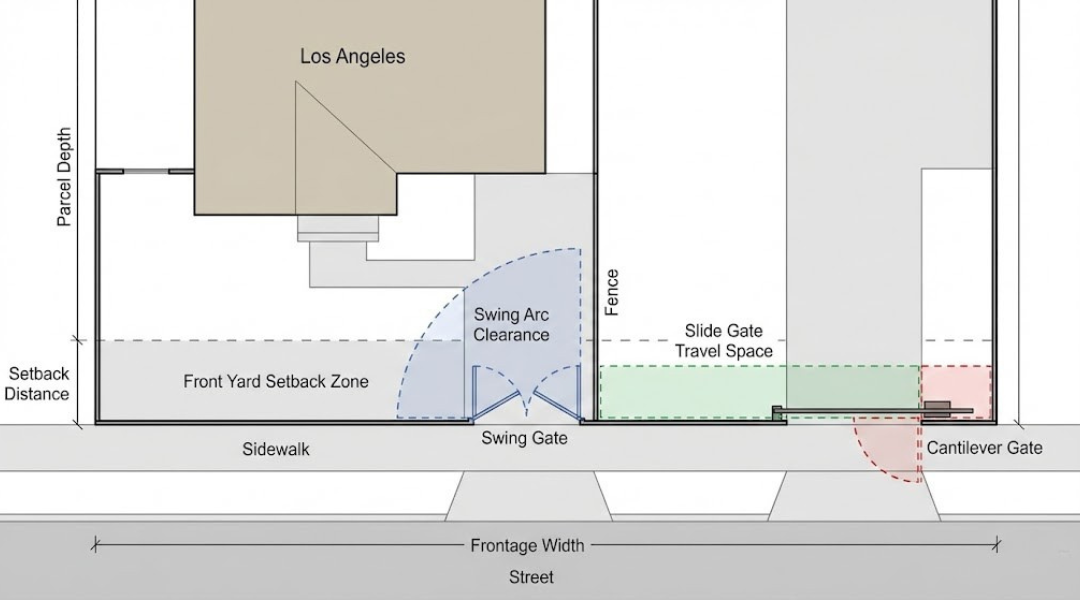
A swing gate needs clear space equal to its full arc of motion. If your frontage is short or your driveway slopes toward the street, the gate could hit a sidewalk or car. A slide or cantilever gate uses less swing space but may need extra lateral room along the fence line for its track or counterbalance section.
| Constraint | Impact on Gate Type |
|---|---|
| Narrow frontage | Limits swing arc and post placement |
| Deep setback | Allows recessed gate installation |
| Irregular lot geometry | May require angled or custom gate frame |
Planning around these measurements early helps avoid code violations and ensures smooth operation without blocking foot or vehicle movement.
Grade Changes, Drainage Paths, And Soil Behavior
Uneven or sloped driveways often create clearance problems. A swing gate must clear the ground while opening, and steep grades can cause the lower edge to drag. Slide and cantilever systems handle slopes better, but the rollers and tracks need level support surfaces to prevent binding.
LA properties in hillside zones may have unstable or compacted soils that shift over time. You might need reinforced posts, deep concrete footings, or retaining blocks to keep gate structures aligned. Drainage channels and runoff paths should stay open; blocking them could cause standing water, corrosion, or frost heave near the gate frame.
Proper grading and sub-base preparation protect both automation components and long-term alignment.
Shared Driveways, Easements, And Edge Conditions
In many LA neighborhoods, driveways serve multiple units or straddle property lines. Before installing a gate, you must confirm who owns and maintains each access section. Recorded easements can limit where posts or tracks can go. If you install a cantilever gate along a shared boundary, its counterbalance may extend into a neighbor’s legal access space.
Clearances near fences, walls, or utility meters also affect installation. Utility easements may block the use of underground wiring for powered gate systems. To stay compliant, locate property pins and verify boundary maps before starting construction.
When edge conditions are tight, compact slide gates or split double-swing designs often fit better than wide single-leaf gates that require extended swing space.
Mechanical Logic Behind Swing, Slide, And Cantilever Gate Systems
Each driveway gate type moves in a distinct way and handles physical forces differently. The structural mechanics determine how smoothly it operates, how much space it requires, and how well it performs under frequent use or changing environmental conditions.
Motion Paths And Force Distribution Across Each System
A swing gate pivots on hinges like a door. A single swing gate uses one leaf, while a double swing gate splits the load between two. The torque acts at the hinge post, which must be anchored strongly to resist bending. Shorter gate arms reduce leverage stress but increase pressure on the hinges.
A sliding gate, including sliding driveway gates and bi-parting gates, moves horizontally along a straight line. The weight distributes across wheels or rollers that travel through a ground track. Force transfers directly downward, allowing the gate to handle heavier panels and automation with less post stress.
A cantilever slide gate replaces the track with a suspended structure. The gate extends beyond the driveway opening, supported by rollers mounted on a vertical post. This design spreads weight over multiple rollers, reducing wear and allowing smoother motion without ground contact.
Track Dependence Versus Suspended Movement
Sliding gates rely on proper ground track alignment. If the track becomes dirty or uneven, the gate’s wheels strain and movement slows. You must keep the path clear of debris, especially gravel or leaves. The advantage lies in the simplicity of parts and smooth gliding when the track is well-maintained.
In contrast, a cantilever gate floats above the ground. The rollers and counterbalance section manage the load, making the gate ideal where dirt, ice, or uneven paving would interfere with a track. This design often requires about 1.5 times the driveway width along the fence line for full opening space.
A swing gate depends entirely on post integrity rather than any track or frame support. Heavy models, especially automatic swing gates, may need adjustable hinges or hydraulic assist to prevent sag over time.
Interaction With Wind Load, Vehicle Clearance, And Usage Frequency
Wide swing gates create broad surfaces that catch wind. On exposed properties, wind pressure can stress hinges or motors, so stronger posts and stiffer materials help prevent flexing. Swing gates also need clear space for the door arc, making slope angle and parking position important.
A sliding gate stays parallel to the fence, presenting little wind resistance. Because it slides laterally, it suits narrow or inclined driveways where swinging clearance is limited. Frequent users benefit from consistent cycle times and stable operation.
The cantilever gate balances both advantages. With no ground track, it tolerates frequent opening in dusty or icy conditions, keeping speed and reliability steady. Wind load distributes through its supporting frame, and the suspended beam allows clean movement even with frequent daily use.
Interpreting Tradeoffs Between Space Efficiency, Reliability, And Long-Term Stability
Choosing between a swing, slide, or cantilever gate means weighing how much space you have, how much maintenance you can handle, and how stable you expect the gate to remain over time. Each design favors certain conditions and exposes different weak points that influence its daily performance and lifespan.
When Simplicity Introduces Hidden Limitations
Swing gates are often seen as straightforward, using basic hinges and a standard gate opener for movement. Their simple setup reduces upfront costs and moving parts. However, this simplicity can bring space and alignment constraints, especially where the driveway slopes or vehicles park close to the gate’s path.
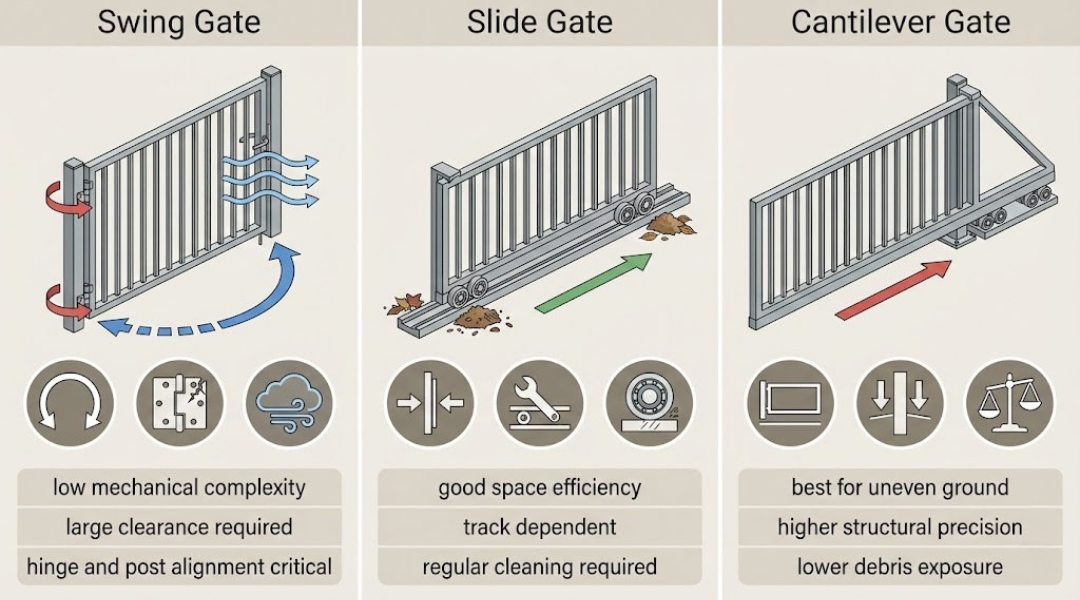
Space efficiency can quickly drop if the gate needs a large arc to operate. You might need longer hinge posts or smaller leaf panels to stay within property lines. While lightweight aluminum gates ease load on the opener, they may flex under pressure if hinges or mounting posts loosen over time. In neighborhoods with tight driveways, simplicity may come at the cost of maneuvering room or consistent operation in heavy wind.
How Complexity Alters Failure Modes And Maintenance Exposure
Sliding and cantilever gates use more complex mechanisms, including rollers, tracks, or counterbalance frames. This complexity supports better space use—especially in narrow or uphill driveways—but also increases potential failure points. Dirt buildup, worn bearings, and stretched chains can cause misalignment or drive motor strain.
Each additional component requires routine checks and lubrication. The balance between reliability and maintenance exposure depends on material quality and installation precision. A well-engineered cantilever system avoids contact with the ground, reducing corrosion risks compared to a tracked slide gate. Still, its structural load rests entirely on its support posts and frame, demanding tighter tolerances and stronger materials to maintain reliable movement.
Misalignment Risks And Tolerance Thresholds Across Designs
Regardless of type, misalignment affects all gates by stressing motors and joints. Swing gates lose stability when hinges sag or posts shift. Sliding gates experience rail damage if the track isn’t level or if debris blocks movement. Cantilever models tolerate small shifts better but depend on exact counterweight balance.
The material and joining methods matter here. Aluminum gates resist rust but may warp under high force unless reinforced at hinge and bracket points. Routine inspection of clearances—such as gate arm swing radius or track straightness—helps ensure consistent operation. Maintaining these tolerance thresholds directly supports long-term stability, keeping your gate system safe and functional through years of service.
Configuration Outcomes In Typical Los Angeles Property Scenarios
Gate performance and convenience depend heavily on how your land sits and how much room you have to operate a gate. Local topography, setbacks, and driveway geometry shape whether a swing, slide, or cantilever setup performs best in daily use and long-term maintenance.
Hillside And Sloped-Lot Properties
Many Los Angeles homes sit on steep grades, where traditional swing gates often struggle. If your driveway slopes upward, an inward-swinging gate may drag against the ground or create clearance problems. Outward-swinging gates can risk obstructing sidewalks or streets, which usually violates city regulations.
In sloped conditions, cantilever slide gates often perform best. Their trackless design means the gate “floats” parallel to the ground, supported by posts rather than wheels on a track. This setup avoids issues with uneven terrain, puddling water, or debris buildup.
You should also evaluate access control placement with these gates. Mounting keypads or intercoms at the right height on a slope may require adjusted posts or a short retaining wall. The extra planning helps prevent confusion for delivery drivers and guests when approaching from an incline.
Narrow Urban Parcels And Zero-Lot-Line Conditions
Small city lots leave little room for gate swing clearance. If your home borders the property line, sliding or cantilever gates use space more efficiently than hinged designs. These gates move horizontally along the fence line and don’t interfere with neighboring sidewalks or street parking.
A slide gate with ground track rollers is economical, but it needs a clean, straight surface. In older Los Angeles neighborhoods where driveways are cracked or slightly misaligned, you may prefer a cantilever system that avoids ground contact.
To maintain security and access control, install compact keypad and remote systems that integrate with limited-space barriers. Choose components rated for heavy use if you share a narrow access road or have frequent service entries. Proper alignment prevents motor strain when operating in tight quarters.
Wide Suburban Driveways With Frequent Vehicle Turnover
Wider suburban lots in areas like Chatsworth or Porter Ranch can handle larger configurations. Here, double swing gates often remain popular because they create a balanced and stately entrance. You can open one leaf for daily use or both for wide vehicles like trailers and RVs.
If you prioritize speed or have frequent deliveries, a rolling slide gate may save time by opening fully along one fence line. Automation units rated for heavier panels prevent mechanical fatigue from constant cycling.
When planning access control, consider separate entry and exit sensors. Adding photo eyes, keypads, and vehicle loop detectors minimizes delays during busy hours. This setup ensures smooth traffic flow while preserving perimeter security and the clean curb appeal typical of many suburban Los Angeles properties.