
Los Angeles homeowners looking to automate their property gates face an important choice: traditional electric operators or solar-powered systems. With the region’s abundant sunshine and growing focus on sustainable living, solar gate operators have become an increasingly popular option. But are they the right fit for your specific property and needs?
Solar-powered gate operators can work well for LA properties, especially those without easy electrical access, but their effectiveness depends on your gate’s location, sun exposure, and usage patterns. Understanding how these systems function and comparing them to traditional options will help you make an informed decision. Factors like installation costs, maintenance requirements, and climate compatibility all play a role in determining which solution makes sense.
This guide explores the technology behind solar gate operators, weighs their advantages against standard electric systems, and examines what makes them suitable or unsuitable for different Los Angeles properties. You’ll learn about key benefits, important limitations, and available features that can enhance functionality and security for your home or business.
How Solar-Powered Gate Operators Work
Solar powered gate operators capture sunlight and convert it into electricity to open and close your gate automatically. The system stores excess energy in backup batteries so your gate works even after dark or during cloudy weather.
Solar Energy Conversion for Gate Automation
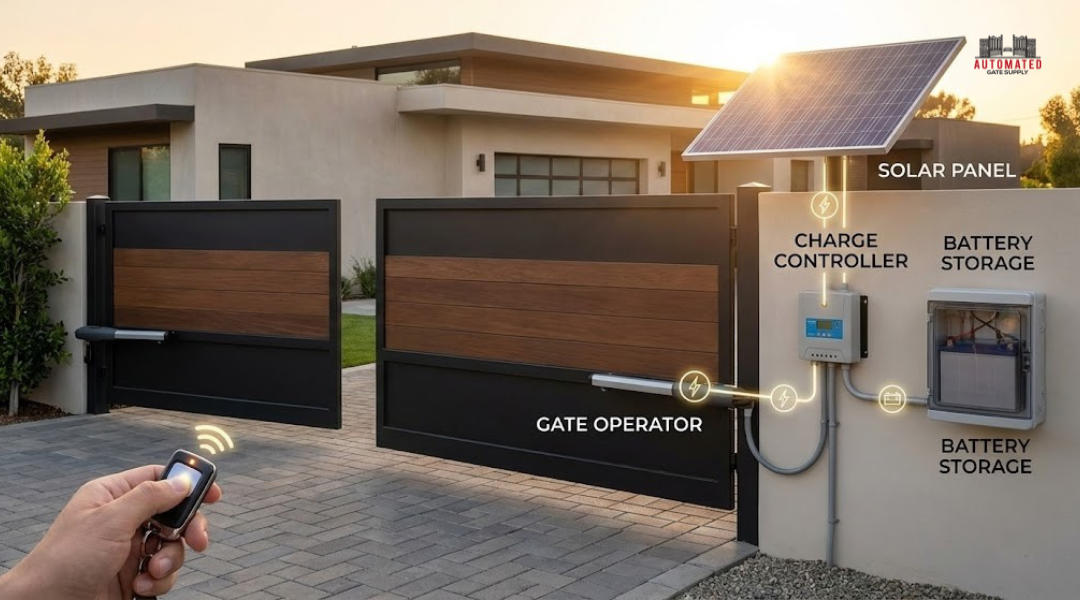
A solar panel mounted on a post or nearby structure collects sunlight throughout the day. The panel contains photovoltaic cells that convert solar energy into direct current (DC) electricity. This electricity flows through a charge controller, which regulates the power to prevent overcharging or damage to the system.
The charge controller sends the electricity to the gate opener’s control box. This box contains the motor and electronic controls that operate your gate. When you press a remote or keypad, the stored solar energy powers the motor to move your gate.
Most solar gate openers work with both swing gates and sliding gates. The motor type varies based on your gate style, but the solar energy conversion process remains the same for both.
Battery Backup and Night Operation
Solar powered gate operators include rechargeable batteries that store energy collected during daylight hours. These backup batteries let your gate function at night and on overcast days when the solar panel produces less power. Most systems use deep-cycle batteries rated between 12 and 24 volts.
The batteries typically hold enough charge to operate your gate 20 to 30 times per day for several days without direct sunlight. LA’s sunny climate means your solar panel will recharge the batteries quickly. During winter months with shorter days, the system continues working because the batteries maintain reserve power.
You should check battery levels every few months to ensure reliable operation. Most control boxes include indicators that show battery charge status.
Comparing Solar-Powered and Traditional Gate Operators
Solar-powered and traditional electric gate operators use different power sources that affect their installation requirements, ongoing costs, and reliability. Your choice between these systems depends on factors like your property’s access to grid power, typical weather conditions, and how frequently you’ll use the gate.
Key Differences in Power Sources
Solar-powered gate operators convert sunlight into electricity through solar panels, storing excess energy in batteries for nighttime or cloudy-day operation. Traditional electric gate operators connect directly to your property’s electrical grid for consistent power delivery.
Power Source Characteristics:
- Solar Systems: Operate on 12-volt DC power stored in batteries. Most residential solar gate operators use 10-watt solar panels that capture and convert sunlight throughout the day.
- Electric Systems: Run on AC power from your electrical grid, requiring a dedicated power line to the gate location.
The battery in a solar system typically stores enough energy to operate your gate for several days during low sunlight periods. Solar panels need direct sun exposure and periodic cleaning to maintain efficiency. Electric operators depend on grid availability, which means power outages will stop your gate from working unless you have backup power.
Solar systems work at lower voltage levels than AC-powered motors, which reduces the risk of electric shock and electrical fires.
Considerations for Automatic Gate Opener Selection
Your property location and gate specifications determine which automatic gate opener works best. Properties with easy grid access benefit from traditional electric operators, while remote locations or areas with unreliable power favor solar options.
Installation Factors:
- Initial Cost: Solar-powered gate operators cost more upfront due to solar panels and batteries, but you may qualify for tax credits or rebates
- Power Requirements: Heavy or frequently-used gates need consistent power that electric operators provide more reliably
- Weather Impact: Extended cloudy periods or storms can reduce solar charging capacity in your area
Electric gate operators handle large, heavy gates more effectively and suit high-traffic commercial applications. Solar gate operators work best for light to moderate residential use. You’ll need to clean solar panels regularly and inspect batteries periodically, while electric systems require less ongoing maintenance.
Suitability of Solar Gate Operators for LA Properties
Los Angeles properties benefit from abundant sunlight that makes solar gate operators a practical choice. Your gate’s size, weight, and swing type will determine which solar system works best for your property.
Assessing Sun Exposure in Los Angeles
Los Angeles receives about 284 sunny days per year, making it an ideal location for solar-powered gate operators. Your property needs direct sunlight on the solar panels for at least 4-6 hours daily to maintain reliable operation.
Check where you plan to mount the solar panels. Look for spots that stay clear of shade from trees, buildings, or tall fences throughout the day. South-facing positions typically receive the most sun exposure in LA.
The city’s mild climate means solar panels work efficiently year-round. Winter months still provide enough sunlight to keep your batteries charged. Most solar gate systems include battery backup that stores power for cloudy days or nighttime operation.
Gate Size and Weight Requirements
Your gate’s dimensions directly affect which solar gate opener will work for your property. Single swing gates up to 16 feet long and 770 pounds can use standard 60W motors. Heavier gates need 80W systems.
Different weight categories require specific equipment:
- Light-duty: Gates under 300 pounds (standard residential)
- Medium-duty: Gates 300-550 pounds (reinforced residential)
- Heavy-duty: Gates 550-880 pounds (commercial or large estate)
Measure your gate’s actual weight before selecting a system. Wrought iron and steel gates weigh more than wood or aluminum. An undersized motor will fail early and cost you more in repairs.
Types of Gates: Single Swing vs Dual Swing
Single swing gates need one motor and operator, while dual swing gates require two synchronized motors. Your choice affects both upfront costs and solar panel requirements.
Single swing gates work well for driveways up to 12-16 feet wide. They need one 20W solar panel and one battery system. Installation is simpler and takes less time.
Dual swing gates handle wider openings from 16-36 feet. These systems use two motors that must open and close together. You’ll need dual 10W solar panels or one 30W panel to power both arms. The control box coordinates both motors to prevent uneven movement.
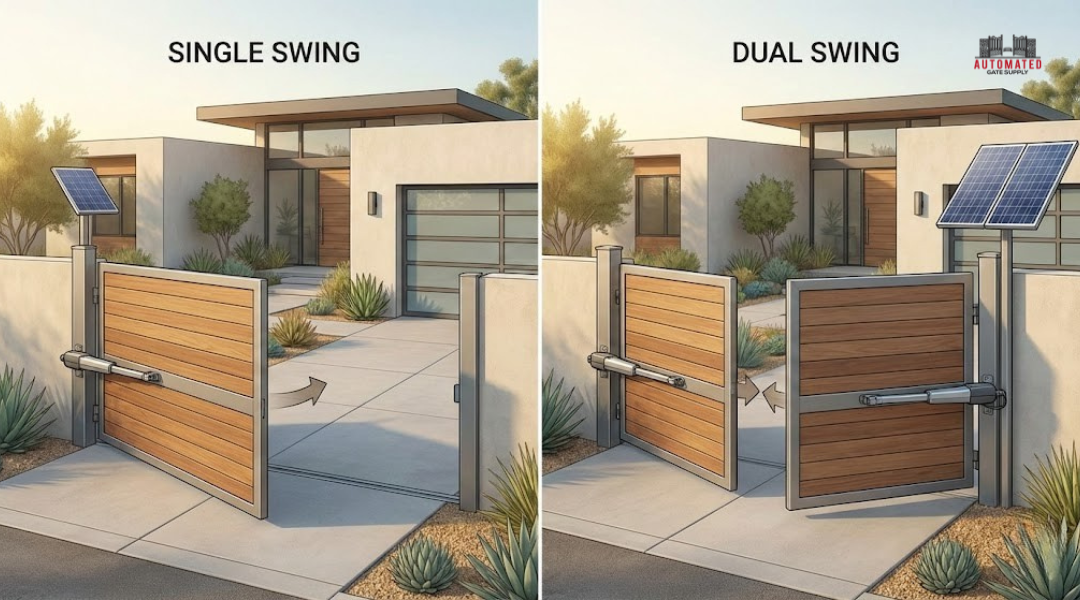
Dual systems cost more initially but provide better clearance for larger vehicles. They also reduce the swing radius needed on each side of your driveway compared to a single wide gate.
Key Benefits of Solar-Powered Gate Operators
Solar-powered gate operators use renewable energy to automate property access while reducing electrical costs and environmental impact. These systems store power in batteries and continue working even when the grid goes down.
Energy Savings and Sustainability
Solar gate openers eliminate monthly electricity costs by converting sunlight into usable power. Your gate operator runs entirely on solar energy captured through roof-mounted or standalone panels, which means you won’t see any increase in your utility bills. The system stores excess energy in battery backup units for nighttime operation and cloudy days.
LA’s abundant sunshine makes solar gate automation particularly efficient. The region receives over 280 sunny days per year, providing consistent energy production. Your solar panels can generate enough power to operate your gate multiple times daily without drawing from the electrical grid.
Environmental benefits include:
- Zero carbon emissions during operation
- Reduced dependence on fossil fuel-based electricity
- Lower overall environmental footprint
- No contribution to grid demand during peak hours
You can also take advantage of federal tax credits for solar installations. The investment in solar energy typically pays for itself within a few years through eliminated electricity costs.
Reliable Operation During Power Outages
Your solar gate opener continues functioning when the power grid fails. Battery backup systems store enough energy to operate your gate for several days without sunlight. This means you maintain property access during blackouts, wildfires, or planned utility shutdowns that affect LA neighborhoods.
Most solar gate operators include deep-cycle batteries that hold significant charge capacity. You can enter and exit your property regardless of grid conditions. The system automatically switches to stored battery power when needed and recharges when sunlight returns.
Low Maintenance and Installation Simplicity
Solar gate automation requires minimal upkeep compared to wired systems. You don’t need trenching for electrical lines or permits for grid connections. The installation process is faster and less invasive to your property.
Maintenance requirements include:
- Cleaning solar panels twice per year
- Checking battery connections annually
- Replacing batteries every 3-5 years
- Occasional inspection of mounting hardware
Your solar panels have no moving parts and typically carry 25-year warranties. The gate operator mechanism requires the same basic maintenance as any automated gate system. You avoid the complications of underground wiring and potential electrical code issues.
Important Limitations and Considerations
Solar-powered gate operators offer clear benefits for LA properties, but they come with specific limitations that affect daily performance and long-term reliability. Battery capacity, local weather patterns, and ongoing maintenance requirements all play critical roles in determining whether these systems meet your property’s needs.
Limitations in Daily Usage and Battery Life
Solar powered gate operators depend entirely on backup batteries to function when sunlight isn’t available. Most systems use 12-volt batteries that store energy collected during daylight hours. The number of gate cycles you can complete on a single charge varies based on battery capacity and gate weight.
A typical residential system can handle 15-30 gate cycles per day under normal conditions. If your property has heavy traffic or multiple deliveries, the battery backup may drain faster than the solar panel can recharge it. Heavy gates require more power per cycle, which reduces the total number of operations available.
Battery capacity degrades over time. Most batteries maintain full performance for 3-5 years before requiring replacement. During this period, you may notice reduced cycle counts, especially during winter months when daylight hours are shorter and charging time is limited.
Weather and Climate Factors
LA’s generally sunny climate favors solar systems, but several weather factors still impact performance. Fog and overcast conditions in coastal areas reduce solar panel efficiency by 50-80%, limiting daily charging capacity. Properties near the coast or in areas with frequent morning fog may need larger solar panels or additional battery backup.
Dust and air pollution accumulate on solar panels, reducing their ability to capture sunlight. In LA’s dry environment, panels can lose 10-20% efficiency without regular cleaning. Shaded locations from trees, buildings, or hills further limit charging capabilities.
Extended cloudy periods, while rare in LA, can exhaust battery reserves if the gate sees regular use. Properties that experience these conditions need systems with higher wattage solar panels and larger battery banks.
Maintenance and Longevity Insights
Solar powered gate operators require specific maintenance to maintain reliable operation. Solar panels need cleaning every 2-3 months to remove dust, pollen, and debris. Battery terminals require inspection for corrosion, and connections need tightening to prevent power loss.
Battery backup replacement represents the largest maintenance cost. Replacement batteries typically cost $100-300 depending on capacity and type. Sealed lead-acid batteries are cheaper but heavier, while lithium batteries cost more but last longer and perform better in temperature extremes.
The motor and mechanical components need the same maintenance as traditional electric openers. This includes lubricating hinges, checking alignment, and inspecting safety sensors. Solar panels themselves are durable and typically last 20-25 years with minimal degradation.
Features and Accessories for Enhanced Functionality
Solar-powered gate operators come with remote control systems that let you open gates from your car, while safety features protect people and vehicles from accidents. These additions make your automatic gate opener more useful and secure for daily use.
Remote Control and Access Kits
Most solar gate automation systems include at least two remote transmitters in the base package. These remotes typically work from 30 to 50 feet away, letting you open your gate before you reach it.
You can add smartphone connectivity to many models. This lets you control your gate through an app on your phone. Some systems connect to home automation platforms, which means you can link your gate to other smart devices on your property.
Common access options include:
- Wireless keypads for entering codes instead of using remotes
- Photo eye sensors that detect vehicles or people
- Intercom systems for visitor communication
- Loop detectors buried in your driveway
Remote control kits use encrypted codes to prevent unauthorized access. You can program multiple remotes for family members or regular visitors. Many control boxes let you add up to 50 different remotes to one system.
Safety and Security Enhancements
Obstacle detection stops your gate if it hits something while opening or closing. This protects your vehicles, pets, and people from getting trapped or damaged.
Soft start and soft stop features make your gate move slowly at the beginning and end of each cycle. This reduces wear on your gate hardware and prevents sudden movements that could cause accidents.
Auto-close timers shut your gate automatically after a set period. You can usually adjust this from 10 seconds to several minutes. Manual release keys let you open your gate by hand during emergencies or system failures.
Safety features to look for:
- Stop-and-reverse sensors that back the gate up when blocked
- Battery backup systems for power outages
- Weatherproof control boxes with IP55 or higher ratings
- Emergency manual release mechanisms
Some automatic gate openers include adjustable force settings. These control how much power the motor uses, which helps prevent damage if the gate meets resistance.