

Automated gates are getting smarter, and artificial intelligence is changing how security systems work. AI now powers features like facial recognition, real-time threat detection, and predictive maintenance that help protect your property better than ever before. These advances make gates more than just barriers—they become active security tools that learn and adapt.
AI-powered gate systems can now identify authorized users, detect unusual behavior, and respond to threats automatically, giving you stronger protection with less manual oversight. The technology combines sensors, cameras, and smart software to create security solutions that work around the clock. From hybrid cloud systems to automated alerts, AI makes gate security faster and more reliable.
This shift affects both homes and businesses that want better access control. The article ahead explores how AI evolved in gate automation, what new features are available now, and what challenges come with connected security systems. You’ll also learn how data improves security over time and what the future holds for automated gate technology.
The Evolution of AI in Automated Gate Security
Gate automation has progressed from simple mechanical openers to sophisticated AI-powered systems that learn, adapt, and predict security threats. Machine learning algorithms now analyze access patterns and detect anomalies that traditional systems would miss.
History of Gate Automation and Access Control
Gate automation started with basic mechanical systems that required manual operation. Early automated gates used simple remote controls and keypads for access. These systems operated on straightforward open-and-close commands without any intelligence.
The 1990s brought electronic access control systems with keypads and card readers. These solutions improved convenience but relied on fixed programming. Gates opened when someone entered the correct code or swiped an authorized card.
Modern pre-AI systems added features like obstacle detection sensors and timer-based operation. Intercom systems and vehicle detection loops became standard. Property managers could control access remotely through basic software. However, these systems couldn’t learn from patterns or adapt to changing security needs.
Rise of Artificial Intelligence in Security Solutions
AI entered the security industry in the early 2000s through video surveillance systems. Computer vision technology allowed cameras to detect motion and identify objects. The physical security market is projected to reach $416 billion by 2030, driven largely by AI adoption.
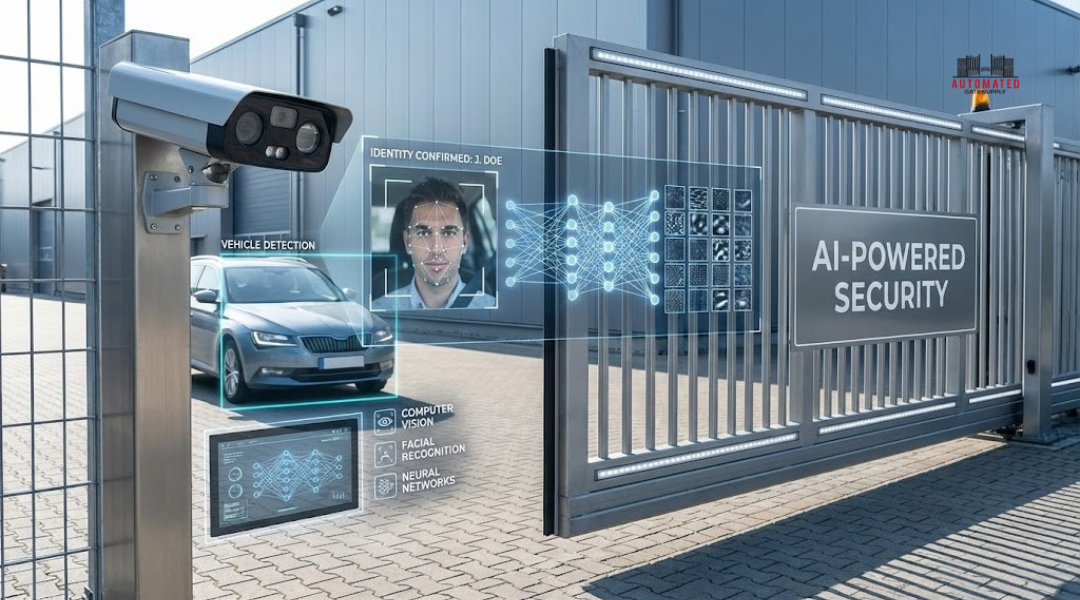
Key AI technologies transforming gate security include:
- Computer vision for facial recognition and vehicle identification
- Natural language processing for voice-controlled access
- Neural networks for analyzing complex security data
- Deep learning for pattern recognition and threat detection
AI systems simulate human intelligence to make decisions about access control. Your gate can now recognize authorized users through biometric data. The technology processes images, learns from past events, and responds to unusual activity.
Integration of Machine Learning for Enhanced Protection
Machine learning allows your gate system to improve over time without new programming. The system analyzes historical access data to establish normal patterns. It learns when specific vehicles typically arrive and which credentials are used most often.
ML-powered gates provide:
- Anomaly detection that flags unusual access attempts
- Predictive maintenance alerts before equipment fails
- Adaptive security responses based on threat levels
- Personalized access preferences for authorized users
Your system can identify suspicious behavior like multiple failed entry attempts or unexpected access at odd hours. ML algorithms process sensor data to distinguish between people, vehicles, and objects in the gate’s path. This creates dynamic obstacle detection that adapts to different situations rather than following fixed rules.
Key AI-Powered Features Transforming Gate Security
AI brings specific capabilities to automated gates that weren’t possible with older systems. These features work together to identify threats as they happen, predict security gaps before they become problems, and verify identities with precision.
Real-Time Threat Detection Systems
Real-time threat detection uses AI algorithms to monitor your gate activity continuously and identify suspicious behavior instantly. The system analyzes video feeds from surveillance cameras and sensor data to spot unusual patterns like loitering, tailgating attempts, or forced entry.
When the AI detects a potential threat, it sends immediate alerts to security personnel or property managers. This happens in seconds, not minutes or hours. The technology can distinguish between normal activity and genuine security concerns, which reduces false alarms that waste your time and resources.
Key capabilities include:
- Motion detection that recognizes abnormal movement patterns
- Vehicle tracking that flags unauthorized access attempts
- Integration with existing intrusion detection systems
- Automatic recording triggered by suspicious activity
Predictive Analytics for Vulnerability Assessment
Predictive analytics examines historical data from your gate system to identify weak points before security breaches occur. The AI looks at access patterns, failed entry attempts, and system usage to forecast where problems might develop.
Your system learns which times of day see the most activity, which access points get used most frequently, and where unauthorized attempts cluster. This information helps you allocate security resources more effectively. You can add extra monitoring during high-risk periods or upgrade specific entry points that show vulnerability.
The technology also predicts maintenance needs by analyzing equipment performance data. This prevents gate malfunctions that could create security gaps.
Facial Recognition and Biometric Access
Facial recognition technology eliminates the need for physical keys, cards, or codes that can be lost or stolen. Your AI-powered gate captures and analyzes facial features to verify identity in real time. The system creates a digital template of authorized users and matches incoming faces against this database.
Biometric access control offers several advantages over traditional methods. You can’t duplicate or share a face the way you can copy a key card. The system also creates detailed logs of who entered and when, providing complete accountability.
Modern facial recognition works in various lighting conditions and can identify individuals even when they’re wearing glasses or have changed their hairstyle. Some systems combine facial recognition with other biometric data like fingerprints for enhanced security at critical access points.
Automation and Incident Response in Modern Gate Systems
Modern gate systems use automation to detect and respond to security incidents within seconds, reducing the workload on security staff while improving threat detection accuracy. These systems create standardized workflows that handle everything from initial alerts to final resolution.
Rapid Response Automation for Security Events
Automated gate systems now respond to security threats without waiting for human intervention. When sensors detect unauthorized entry attempts or suspicious activity, the system immediately executes predefined actions like locking down specific access points or activating additional surveillance cameras.
Your gate system can automatically isolate compromised areas within milliseconds of detecting a breach. The automation handles alert triaging by sorting incidents based on severity levels, ensuring critical threats get immediate attention. This speed makes a real difference when preventing unauthorized access.
AI-powered systems analyze patterns in real-time to identify potential security risks before they become actual breaches. Your automated response might include blocking specific RFID tags, denying access requests, or triggering alarms based on the type of threat detected.
Streamlined Security Operations
Automation reduces the repetitive tasks that typically consume security staff time. Your system handles data collection, threat intelligence gathering, and routine monitoring without constant human oversight.
Security operations become more efficient when automated systems take over time-consuming tasks. The software continuously monitors gate activity, logs every entry and exit attempt, and flags unusual patterns for review. This frees your security team to focus on complex decisions that require human judgment.
Automated systems also maintain consistent security standards across all access points. You get uniform response protocols whether an incident occurs at 3 PM or 3 AM. The system doesn’t experience fatigue or distraction, maintaining the same level of vigilance around the clock.
Incident Response Workflows
Modern gate systems follow structured workflows that guide each security incident from detection to resolution. Your system documents every step automatically, creating detailed records for later review and compliance requirements.
A typical workflow includes these stages:
- Detection: Sensors or AI identify the security event
- Assessment: System evaluates threat level and type
- Action: Automated responses execute based on predefined rules
- Logging: All details get recorded in your central database
- Notification: Alerts go to appropriate security personnel
These workflows ensure nothing falls through the cracks during an incident. Your system follows the same proven process every time, eliminating the inconsistency that comes with manual responses. You can also adjust these workflows as your security needs change or new threats emerge.
Cybersecurity Risks in AI-Enabled Gate Technologies
AI-powered automated gates face new digital threats that target their learning systems and network connections, require careful management of access records, and raise questions about how systems collect and use personal data.
Emerging Digital Threats
AI-enabled gates create new entry points for cyber attacks beyond traditional wireless signals. Hackers can manipulate the data that trains AI models, causing systems to misidentify authorized users or allow unauthorized access. These poisoning attacks target the machine learning algorithms that recognize faces, license plates, or behavior patterns.
Signal interception remains a major risk as AI systems often transmit more data between gates, cloud servers, and control panels. Attackers use brute force methods to crack weak passwords on AI access control systems. Some criminals employ adversarial attacks that trick facial recognition with specially designed patterns or images.
Common AI-specific vulnerabilities include:
- Machine learning model theft through reverse engineering
- Input manipulation to bypass biometric authentication
- Exploitation of API connections between AI systems and gate hardware
- Attacks on cloud-based processing servers that analyze gate activity
You need strong encryption for all data transmitted between gate components and AI processing units. Multi-factor authentication adds protection against unauthorized remote access to AI control systems. Regular firmware updates patch security holes that hackers could exploit in your AI-enabled gate infrastructure.
Managing and Securing Security Logs
AI systems generate large volumes of access records that document every gate interaction and decision. These logs contain sensitive information about when people enter or leave, facial recognition data, and license plate numbers. Poor log management creates security gaps that let attackers cover their tracks or steal personal information.
You must encrypt security logs both when stored and during transmission to monitoring systems. Access to log files should be restricted to authorized personnel with strong authentication requirements. Set up automated alerts that flag unusual patterns like repeated failed access attempts or changes to log files.
AI systems need clear retention policies that specify how long to keep different types of logs. Delete outdated records to reduce the data available if a breach occurs. Back up critical logs to secure, offline storage to prevent loss during ransomware attacks. Regular audits help verify that log security measures work properly and meet privacy requirements.
Data Transparency and Privacy Concerns
AI-enabled gates collect biometric data, behavioral patterns, and movement tracking information that raises privacy questions. Users often don’t know what data the system captures, how long it’s stored, or who can access it. This lack of transparency creates legal risks under data protection regulations.
You need clear policies that explain what data your AI gate system collects and why. Provide users with the ability to review their stored information and request deletion when possible. Limit data collection to what’s necessary for security purposes rather than gathering excessive information.
Consider implementing on-device processing that analyzes data locally instead of sending it to cloud servers. This approach reduces the risk of data interception during transmission. Use anonymization techniques that remove identifying details from stored records while maintaining security functionality.
Key transparency practices include:
- Publishing data collection policies in plain language
- Offering opt-in choices for non-essential features
- Conducting regular privacy impact assessments
- Providing access logs that show who viewed stored data
The Role of Smart Devices and Connected Ecosystems
Smart devices transform automated gates into complete security solutions through digital access control and integrated alarm systems. These connected ecosystems let you monitor and control gate access from anywhere while coordinating responses across multiple security layers.
Smart Locks and Digital Keys
Smart locks eliminate the need for physical keys and remote controls at your automated gate. You can grant access through mobile apps, sending digital keys to visitors, delivery drivers, or service providers with specific time limits. These keys expire automatically once their window closes.
Digital access control gives you a detailed log of who enters and exits your property. You can track every gate opening with timestamps and user identification. Most systems let you revoke access instantly if a digital key is compromised or no longer needed.
Many smart locks work with common platforms like Apple HomeKit, Google Home, and Amazon Alexa. This compatibility means you can unlock your gate using voice commands or integrate it into automated routines. For example, your gate can unlock automatically when you arrive home based on your phone’s GPS location.
Integration with Alarms and Sensors
Connected sensors create a security network around your automated gate. Motion detectors, cameras, and occupancy sensors communicate with your gate system to trigger specific responses. When a sensor detects movement near your closed gate, it can send you an alert and start recording video.
Your gate system can connect directly to your home’s alarm system. If someone tries to force the gate open, the alarm activates immediately and notifies you and your security monitoring service. This integration provides faster response times than standalone systems.
IoT-enabled sensors also improve safety. Photo eyes and pressure sensors detect vehicles or people in the gate’s path and stop movement to prevent accidents. These sensors share data across your connected ecosystem, so your gate won’t close if your security camera detects someone nearby.
Leveraging Data for Continuous Improvement and Proactive Security
AI-powered automated gate systems analyze patterns from past events to predict and prevent security threats before they happen. These systems get smarter over time through machine learning algorithms that learn from each interaction and security event.
Historical Data and Behavioral Analysis
Your automated gate system collects data from every entry, exit, and security event that occurs. This historical data becomes the foundation for identifying normal patterns and spotting unusual behavior. Machine learning algorithms review this information to understand typical traffic flows, peak usage times, and authorized user behaviors.
When the system detects actions that don’t match established patterns, it can flag them for review or take automatic action. For example, if someone tries to access a gate at an unusual time or uses credentials in an unexpected way, the system recognizes this deviation. The more data your system collects, the better it becomes at separating real threats from normal variations in behavior.
This analysis helps you address vulnerabilities before they turn into actual security breaches. You can identify weak points in your security setup and make improvements based on real evidence rather than guesswork.
Continuous Learning and System Updates
Machine learning models in your gate system need regular training with new data to stay effective. As threat detection methods improve, your system should receive updates that include the latest security intelligence and defense strategies.
Your AI system learns from each false alarm and missed threat to refine its accuracy. This ongoing improvement reduces the number of unnecessary alerts your security team must handle. Updates should include new threat patterns, improved recognition algorithms, and better response protocols.
You need to monitor your system’s performance regularly to make sure it meets your security goals. Testing new updates before full deployment helps you avoid problems with your existing security setup.
The Future Landscape of Automated Gate Security
Automated gate security is evolving rapidly as new technologies reshape how businesses and property owners protect their assets. The security industry is shifting toward AI-driven systems and comprehensive service models that address multiple protection needs at once.
Trends in Security Industry Innovation
The security industry is experiencing a major shift toward intelligent automation. AI-powered gate systems now use machine learning to recognize patterns and detect potential threats before they become problems. These systems can identify unusual activity and send instant alerts to property owners.
Biometric access control is becoming standard in automated gate technology. Facial recognition and fingerprint scanning replace traditional key cards and codes. This makes unauthorized entry much harder.
Solar-powered gate systems are gaining popularity as businesses look for sustainable security solutions. These systems reduce energy costs while maintaining reliable operation. The integration of IoT connectivity allows your gates to communicate with other security devices like cameras and alarm systems.
Security solutions now include predictive maintenance features. Your gate system can alert you when components need servicing before they fail. This prevents unexpected downtime and extends equipment life.
Growing Demand for Integrated Security Services
Property owners increasingly want security services that work together seamlessly. Your automated gate system can now connect with surveillance cameras, intercom systems, and building access controls through a single platform.
This integration lets you monitor all entry points from one dashboard. You can grant visitor access remotely and receive real-time notifications about gate activity. Cloud-based systems make it easy to manage multiple locations from anywhere.
The demand for comprehensive security solutions is driving companies to offer full-service packages. These include installation, monitoring, and maintenance under one contract. You get faster response times when issues arise because the same provider manages all your security components.
Multi-factor authentication is becoming essential in integrated systems. Your gates can require both biometric verification and mobile device confirmation before allowing access. This layered approach significantly reduces security breaches.