

If your gate system was installed more than a few years ago, it may no longer meet today’s safety or compliance requirements. Standards have changed to protect against risks like entrapment, mechanical failure, and poor visibility. Retrofitting your older gate with modern safety components helps you protect property, reduce liability, and bring your system up to current code without replacing it entirely.
At Automated Gate Supply in North Hollywood, you can find the parts, controllers, and safety accessories needed to upgrade an existing swing or slide gate. With over two decades of experience serving Los Angeles County, the team provides the guidance and hardware required to align older gate systems with current UL 325 and ASTM safety expectations. Whether you manage a residential driveway gate or a commercial access system, the right retrofit approach can improve reliability and ensure safe operation.
This discussion explains when legacy gate systems create compliance risks, how modern standards address them, and what steps you can take before starting your retrofit. It will help you understand not just the benefits of meeting today’s safety codes but also how the right upgrades change system behavior and long-term performance.
When Older Gate Systems Create Safety and Compliance Exposure
Many older gate systems lack modern safety technology and fail to meet current UL 325 and ASTM 2200 standards. Aging hardware, missing sensors, and poor maintenance often leave your property open to both physical risks and legal liability.
Common Age-Related System Characteristics and Limitations
Older gate systems often rely on outdated mechanical components that wear down over time. Corrosion, weak hinges, and worn rollers can cause inconsistent gate movement or unexpected stops. Electrical systems may struggle with unstable wiring, noncompliant control boards, or missing safety interlocks.
You may also find that early automation designs lack photoelectric sensors, safety edges, or loop detectors now required for proper entrapment protection. Even if sensors were once installed, they can become misaligned or fail after years of exposure. Without regular testing, you might not notice a malfunction until the system causes an incident.
A quick reference of common deficiencies:
| Component | Typical Issue | Safety Impact |
|---|---|---|
| Mechanical arms | Metal fatigue | Uncontrolled motion |
| Photo eyes | Misalignment | Missed obstruction detection |
| Control boards | Outdated firmware | Inadequate fail-safes |
| Safety edges | Cracked or disconnected | No contact response |
Older configurations also tend to lack emergency stop controls and manual release options, making it difficult to act quickly during a failure. These deficiencies not only increase injury risk but also create compliance problems under current safety codes.
Property Types Most Affected by Outdated Gate Configurations
High-use sites such as apartment complexes, industrial facilities, and storage properties face the greatest risk from aging gates. These locations operate gates dozens or even hundreds of times per day. Frequent movement magnifies wear on parts and increases the chance of a malfunction.

Commercial lots with heavy sliding or swing gates are particularly vulnerable because of their size and motion force. A failing sensor or motor can lead to sudden closure on vehicles or pedestrians. Older residential communities may still have systems installed before UL 325 updates, leaving gates with minimal safety hardware or inadequate signage.
Properties with multiple entry points also struggle with consistency. One gate might meet current standards while others lag behind, exposing you to liability for partial compliance. Without a structured inspection plan or centralized maintenance record, these problems can persist unnoticed.
To stay compliant, you should assess each access point separately and verify that every gate includes functional photo eyes, safety edges, loop detectors, and manual overrides. Neglecting even one outdated system can put your entire site out of compliance and increase the risk of accidents.
What This Retrofit Discussion Covers and What It Does Not
This part explains which retrofit topics help you bring older gate systems up to current safety and performance levels. It also clarifies which projects fall outside the scope, such as full replacements or structural redesigns that need engineering work.
Safety Standards and Functional Upgrades Addressed
You will learn how retrofitting focuses on meeting UL 325 and ASTM F2200 safety standards. These standards cover sensor placement, entrapment protection, and gate movement control. Updates often include photo-eye sensors, edge sensors, and reversing mechanisms that stop gate motion when an obstruction is detected.
Technicians may also install modern control boards to replace outdated logic systems. These upgrades improve safety and reliability while allowing smoother operation. Adding smart access controls or integrating the gate with a home automation system can enhance usability without changing the existing structure.
A retrofit can also address electrical safety, such as updating wiring to meet current codes or improving power efficiency through low-voltage systems. You will maintain your existing gate frame but upgrade hardware and electronics for compliance, function, and user safety.
| Upgrade Type | Goal | Typical Components |
|---|---|---|
| Safety Compliance | Meet UL 325 / ASTM F2200 | Sensors, control logic, warning devices |
| Functional Modernization | Improve reliability | Control boards, motors, access systems |
Exclusions Related to New Installations and Site-Specific Engineering
This discussion does not include new gate installations or structural redesign projects. If your property needs new posts, foundations, or wide-span custom gates, you will need engineering evaluation and possibly city permits. Retrofitting addresses existing systems that remain structurally sound.
You also won’t find coverage of brand-new automation systems or custom fabrication for unique sites. Those involve different design processes and more complex planning. Retrofitting assumes a working gate system that only needs safety or control updates.
Lastly, heavy vehicle entry gates or industrial systems with high-cycle use may require separate mechanical analysis. Those cases usually fall under specialized contractors rather than general gate service providers like Automated Gate Supply at 8323 Lankershim Blvd, North Hollywood, CA.
How Modern Gate Safety Standards Address Legacy Risks
Older gate systems often lack safeguards that prevent injuries or mechanical failure. Modern safety standards introduce clear design requirements and sensor-based controls that help you reduce entrapment hazards, limit impact force, and maintain safe operation through proper system logic and compliance testing.
Entrapment Hazards, Force Limitations, and Monitoring Logic
You must ensure your gate protects users from being trapped between moving parts. Modern gates use photoelectric sensors, edge sensors, or non-contact detection devices that reverse or stop the gate when an obstruction appears. If your older system doesn’t include these features, you can retrofit sensors along the gate edges or near pinch points to reduce risk.
Current safety standards also set force limitation thresholds for moving gates. Controllers continuously measure torque or motor current to restrict force levels during opening and closing. Firmware updates and control-board replacements make this possible even on legacy systems.
Modern systems use monitoring logic to verify sensors, wiring, and safety devices before operation. When a fault occurs—such as a broken cable—the system disables motion until the issue is fixed. This failsafe logic prevents the gate from operating under unsafe conditions and ensures predictable performance.
The Role of UL 325 and ASTM F2200 in Retrofit Decisions
When you upgrade or retrofit an older gate, your work must align with UL 325 and ASTM F2200 standards. UL 325 governs electrical and operational safety for gate operators, covering items such as required sensors, user controls, and automatic reversal functions. It defines how your gate must react to obstructions and what warning signage is needed.
ASTM F2200 focuses on the physical structure of the gate itself, including spacing between bars, edge gaps, and travel paths. Meeting these guidelines reduces crush zones and helps prevent users from reaching into moving parts.
| Standard | Focus Area | Key Retrofit Considerations |
|---|---|---|
| UL 325 | Controls and Electrical Safety | Add monitored sensors, check reversal timing, and confirm operator compatibility. |
| ASTM F2200 | Gate Construction and Design | Adjust gate clearances, reinforce panels, and ensure smooth motion. |
By combining these two standards, you keep both electronic controls and mechanical design in compliance, which strengthens your gate’s overall safety profile.
How to Evaluate an Existing Gate System Before Retrofitting
Before upgrading an older gate system, you need a clear understanding of its current condition and compliance gaps. Evaluating performance, safety devices, and integration with supporting equipment helps determine what must be replaced, reprogrammed, or rewired to meet modern safety standards.
Mechanical Condition, Control Systems, and Operating Environment
Start by inspecting the mechanical components such as hinges, rollers, gearboxes, and gate arms. Look for corrosion, excessive wear, and uneven movement. Measure gate balance and check for proper alignment, as binding or slippage may signal internal damage.
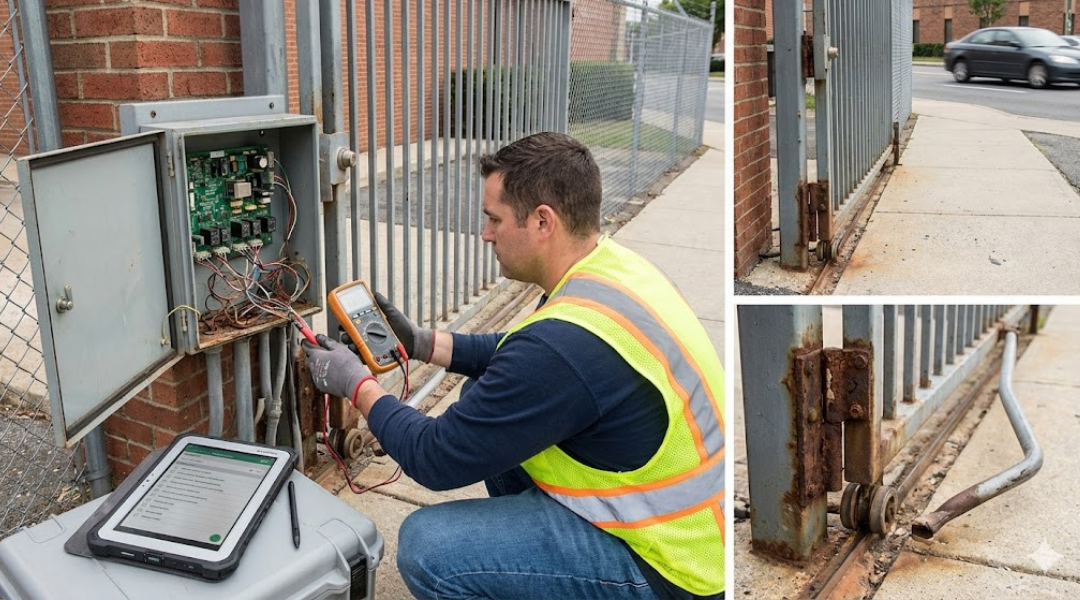
Next, review the control system. Confirm that existing wiring diagrams and control boxes match the original installation manual. Outdated relays or controllers can limit compatibility with newer safety sensors and smart automation kits. Use a multimeter to test voltage and continuity before connecting new devices.
Pay attention to the operating environment. Factors like weather exposure, surrounding structures, and vehicle traffic can affect system lifespan and safety. If the gate operates near pedestrians or narrow driveways, identify any pinch points or blind spots. Document issues using photos or notes to reference during retrofitting and compliance checks.
Risk Prioritization, Liability Exposure, and Upgrade Feasibility
Assess risks by ranking hazards based on severity and likelihood. A simple table can help organize findings:
| Hazard | Potential Impact | Likelihood | Priority |
|---|---|---|---|
| Lack of safety sensors | Injury to user | High | 1 |
| Rusted hinge | Mechanical failure | Medium | 2 |
Review your results against UL 325 and ASTM F2200 safety standards. This helps you identify liability exposure from outdated equipment or missing safeguards. Older gates without entrapment protection or emergency stop features need immediate attention.
Finally, decide whether upgrading or full replacement makes more sense. Compare the cost of adding sensors and rewiring controls with the expense of a new operator. Check manufacturer support for older models—if installation manuals or replacement parts are unavailable, retrofitting may not be practical. Record all decisions for future maintenance and legal compliance.
How Retrofit Approaches Change System Behavior and Outcomes
When you retrofit an older gate system, the updates change more than physical components. These changes modify how the system senses, reacts, and protects users, improving both reliability and compliance.
Adding Safety Devices, Controls, and Fail-Safe Mechanisms
Installing modern safety devices changes how a gate system responds to movement and obstruction. You can add photoelectric sensors, edge safety sensors, or loop detectors that detect vehicles or people and stop motion immediately. These tools reduce crush and impact hazards that older models often lack protection against.
You also benefit from upgraded control boards that allow programmable speed, sensitivity, and response timing. During installation, you’ll need to test each connection and verify that sensors communicate properly with the main controller. Proper configuration ensures consistent operation across open, close, and stop commands.
A common retrofit setup includes:
| Component | Function | Priority |
|---|---|---|
| Photo eyes | Detect obstructions | High |
| Edge sensors | Stop gate on contact | High |
| Loop detectors | Vehicle detection | Medium |
| Backup battery | Keeps system running during outages | Medium |
Including fail-safe features such as release mechanisms and power-failure modes provides controlled manual operation if the system loses power. These additions reduce liability while improving user trust.
Operational Improvements, Compliance Alignment, and Long-Term Use Implications
Upgrading components changes the gate’s mechanical and electronic behavior. New motors, limit switches, and sensor circuits deliver smoother movement and shorter response times. These refinements not only make operation quieter but also extend the lifespan of key parts.
Modern systems comply with UL 325 and ASTM F2200 safety standards. Retrofitting helps match your system to these codes without replacing the entire gate. You align your site with industry and insurance requirements by installing compliant devices and performing documented safety tests.
In the long term, lower wear rates and improved diagnostics reduce repair costs. Smart controls with self-monitoring and wireless connectivity give you quick alerts when faults occur. By modernizing control systems now, you maintain consistent performance and reduce downtime for years to come.